How Appraisal Management Services Simplify the Property Valuation Process
Every property transaction depends on accurate information, and one of the most important pieces of that puzzle is the valuation. Whether a property is being purchased, refinanced or used as security for a loan, lenders need confidence that its value has been assessed fairly and independently. While the appraisal itself is completed by a qualified professional, coordinating the entire process involves far more than simply arranging an inspection. This is where appraisal management services provide significant value, acting as the link between lenders, appraisers and other parties while helping transactions move forward efficiently.
Many people only encounter the appraisal process once or twice in their lives and may not realise how many moving parts are involved behind the scenes. Once a lender requires a valuation, an appraiser must be selected, the inspection arranged, property information gathered, deadlines monitored, reports reviewed and documentation delivered. If any one of these stages is delayed or handled poorly, the entire property transaction can slow down.
Appraisal management services exist to reduce that complexity. Rather than requiring lenders to coordinate every stage internally, specialist providers oversee the process from start to finish, ensuring valuations are completed consistently, accurately and within agreed timescales.
Acting as a Central Point of Coordination
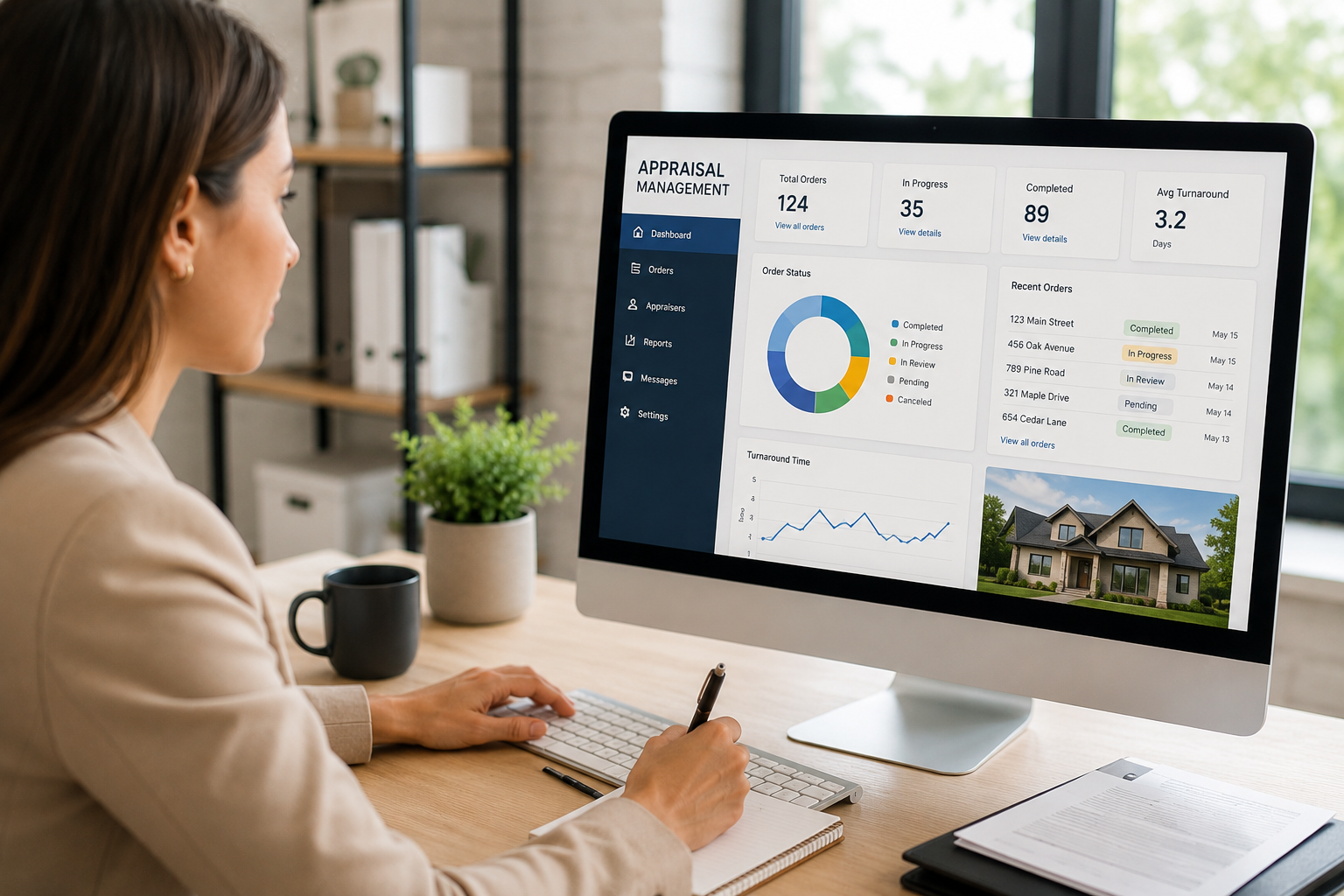
One of the greatest advantages of appraisal management services is that they provide a single point of contact for everyone involved.
Instead of lenders communicating separately with multiple independent appraisers, scheduling inspections and tracking progress manually, the management company coordinates these activities on their behalf. This centralised approach creates a more organised workflow and reduces the likelihood of miscommunication.
It also allows borrowers, brokers and lenders to receive clearer updates throughout the process, helping everyone understand where the valuation stands and what happens next.
Helping Appraisers Focus on Valuations
Qualified appraisers are trained to assess properties, analyse comparable sales and prepare professional valuation reports. Administrative tasks such as appointment scheduling, status updates and document management can reduce the amount of time available for these specialist responsibilities.
Appraisal management services remove much of this administrative burden.
By handling communication, coordination and documentation, they allow appraisers to concentrate on producing accurate, well-supported valuations rather than managing paperwork and logistics.
This often benefits both lenders and borrowers by improving efficiency without compromising quality.
Supporting Faster Turnaround Times
Property transactions frequently operate under tight deadlines.
Buyers may have agreed completion dates, sellers may be coordinating onward purchases and lenders often work to internal service targets. Delays in obtaining a valuation can have consequences throughout the wider transaction.
While no organisation can completely eliminate delays caused by weather, access issues or unusually complex properties, appraisal management services help minimise avoidable disruptions by monitoring progress closely.
Many providers use workflow management software that tracks every stage of an appraisal request. If inspections are delayed or reports remain outstanding, coordinators can intervene before minor issues develop into major bottlenecks.
Improving Quality Control
Receiving an appraisal report is not necessarily the end of the process.
Reports are often reviewed to ensure they meet required standards before being delivered to lenders. Missing information, inconsistencies or formatting issues can create unnecessary delays if they are only identified at the final stage.
Many appraisal management services include structured quality assurance procedures that review reports before submission.
This additional oversight helps identify problems early, reducing the likelihood of revision requests while giving lenders greater confidence in the information they receive.
Making Better Use of Technology
Technology has changed the way appraisal management operates.
Modern platforms can automate order allocation, provide real-time progress updates and securely store documentation throughout the valuation process. Rather than relying on lengthy email chains or manual spreadsheets, participants can often access a central system showing the current status of every appraisal.
Automation also reduces repetitive administrative work, allowing staff to focus on customer service and exception handling rather than routine data entry.
For lenders managing hundreds or even thousands of valuations each month, these efficiencies can produce significant operational improvements.
Supporting Compliance
Property valuations form an important part of responsible lending.
Lenders must ensure valuations are obtained appropriately and that appraisal processes meet applicable regulatory and professional standards. Maintaining consistent procedures becomes increasingly important as transaction volumes grow.
Appraisal management services help support compliance by providing documented workflows, maintaining complete audit trails and ensuring valuation orders follow established procedures.
While responsibility for regulatory compliance ultimately remains with the lender, structured management processes make it easier to demonstrate that appropriate controls are in place.
Creating Consistency Across Large Operations
Large lending organisations often work with appraisers across multiple cities, regions or even countries.
Without consistent management, processes may vary significantly between locations, creating different customer experiences and operational inefficiencies.
Appraisal management services help standardise procedures regardless of geography.
Common ordering processes, reporting standards, communication methods and quality reviews provide greater consistency while making performance easier to monitor across an entire organisation.
Reducing Administrative Pressure
Managing property valuations internally requires considerable coordination.
Staff must assign orders, monitor deadlines, respond to enquiries, manage documentation, review reports and resolve unexpected issues throughout the transaction.
As business volumes increase, these administrative responsibilities can become increasingly demanding.
Outsourcing appraisal management allows internal teams to concentrate on lending decisions, customer relationships and other core business activities while experienced specialists oversee the valuation process.
For many organisations, this improved allocation of resources represents one of the greatest benefits of using external management services.
Improving the Customer Experience
Although appraisal management often operates behind the scenes, it has a direct impact on the customer experience.
Borrowers appreciate clear communication, predictable timelines and prompt updates. Delays or uncertainty during the valuation stage can create unnecessary stress during what is already an important financial transaction.
Efficient coordination helps reduce uncertainty by ensuring everyone involved understands the current stage of the process and any actions still required.
Even when delays occur for legitimate reasons, proactive communication often improves customer satisfaction because expectations are managed appropriately.
Supporting Long-Term Business Performance
The advantages of appraisal management services extend beyond individual property transactions.
Consistent processes, reliable reporting, stronger quality control and improved operational efficiency all contribute to better long-term performance.
Lenders benefit from streamlined workflows and reduced administrative costs. Appraisers spend more time focusing on professional valuation work. Borrowers experience smoother transactions with clearer communication.
These combined benefits create a more efficient property valuation process for everyone involved.
As property markets continue to evolve and transaction volumes fluctuate, the demand for organised, technology-supported valuation management is likely to continue growing. Appraisal management services simplify what is often a complex administrative process by bringing together coordination, quality assurance, technology and communication within a single structured system. Rather than replacing the expertise of qualified appraisers, they enhance the overall process, helping valuations progress more efficiently while supporting lenders, property professionals and borrowers alike.