How to Prevent Pests with a Simple Room-by-Room Home Inspection
Pest prevention is easier when it becomes part of regular home care instead of a reaction to an unexpected sighting. A simple inspection routine helps homeowners, renters, and property managers notice the food, moisture, shelter, and access points that can make a space more attractive to pests. For recurring concerns or help identifying activity, Pointe Pest Control can provide professional support alongside practical home maintenance.
The goal is not to make a home perfectly sterile. It is to remove avoidable conditions, monitor for changes, and address small repairs before they become bigger problems. These habits also support healthy housing practices, including keeping indoor areas clean, dry, ventilated, and well-maintained.
Table of Contents
- 1 Why a Room-by-Room Check Works
- 2 Start Outside: Inspect the Home’s Perimeter
- 3 Kitchen and Bathroom Pest Prevention Checklist
- 4 Bedrooms and Living Areas
- 5 Garage, Attic, Storage Areas, Basements, and Crawl Spaces
- 6 Pet Areas and Indoor Plants
- 7 Safe Pest Prevention Products and a Seasonal Plan
- 8 When to Call a Pest Professional
- 9 Final Checklist
Why a Room-by-Room Check Works
Pests do not need much space to settle in. A leaking pipe, crumbs beneath an appliance, a torn screen, or a stack of undisturbed boxes can create an opportunity. Checking each area separately makes it easier to spot patterns and complete repairs. The strongest prevention plans combine cleaning, exclusion, monitoring, and prompt attention to moisture problems.
Start Outside: Inspect the Home’s Perimeter
Many indoor issues begin at the exterior. Walk slowly around the foundation, siding, roofline, doors, windows, vents, and utility openings. Look for cracks, loose screens, damaged weather stripping, and gaps where pipes or cables enter the building.
- Direct water away from the foundation and remove standing water when possible.
- Keep leaves, mulch, and yard debris from building up against exterior walls.
- Trim branches and dense plants that touch the roof or siding.
- Store firewood away from the house and off the ground.
- Check outdoor trash containers, hose connections, pet bowls, and light fixtures regularly.
Kitchen and Bathroom Pest Prevention Checklist
Kitchen
Kitchens provide reliable sources of food, warmth, and water. Wipe crumbs and grease from counters, floors, cabinet edges, and around small appliances. Store cereal, flour, rice, snacks, and pet food in sealed containers. Empty indoor trash regularly, use a tight-fitting lid, and clean spills inside the bin.
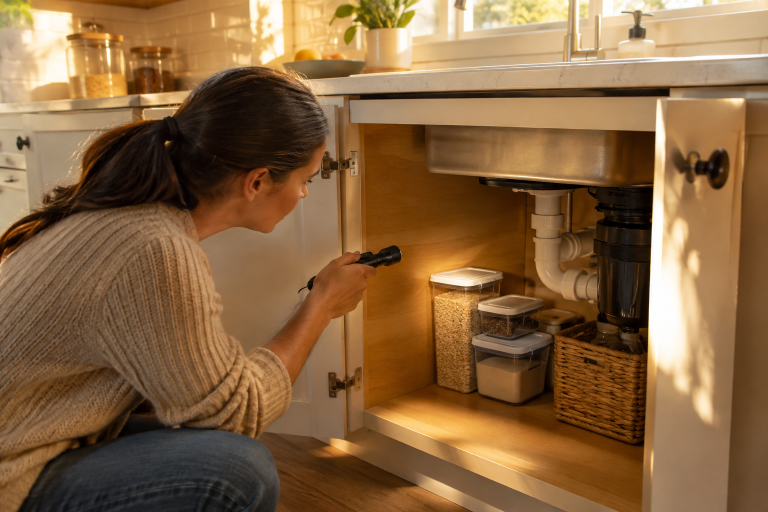
Look beneath sinks for leaks, damp wood, or openings around pipes. When practical, vacuum and clean behind appliances. In the pantry, inspect packages for holes, webbing, insects, or unusual odors before bringing more food into the space.
Bathroom
Bathrooms deserve attention because moisture can collect in hidden areas. Repair dripping faucets and slow leaks, run the exhaust fan during and after showers, and check caulk around tubs, sinks, showers, and toilets. Keep wet towels and bath mats from remaining on the floor for long periods, and remove buildup from drains.
Bedrooms and Living Areas
Living spaces may offer fewer food sources, but they can provide shelter. Reduce piles of clothing, paper, and unused belongings, especially along walls and beneath beds. Keep storage containers off the floor when possible, vacuum baseboards and furniture edges, and repair torn window screens promptly.
After travel, moving, or purchasing secondhand furniture, inspect mattresses, bed frames, sofas, and upholstered chairs before settling in. Watch for droppings, shed skins, stains, gnaw marks, or persistent musty or animal-like odors. Repeated signs in more than one room deserve closer attention.
Garage, Attic, Storage Areas, Basements, and Crawl Spaces
Quiet, rarely used areas can hide early activity. Replace fragile cardboard boxes with sealed plastic bins when possible, keep stored items a few inches away from walls, and remove clutter that cannot be inspected easily. Check garage-door seals, attic vents, access panels, roofline screens, and gaps at side doors.
In basements and crawl spaces, use a flashlight to look for damp spots, condensation, musty odors, damaged insulation, droppings, nesting material, or wood that stays wet. Inspect foundation walls and vents for cracks or damage. Avoid handling unknown waste or nesting material without appropriate protection.
Pet Areas and Indoor Plants
Pet food, water bowls, bedding, and plant saucers can be overlooked attractants. Pick up uneaten pet food after meals, wash bowls often, and store food in sealed containers. Launder pet bedding according to its care label. For houseplants, avoid overwatering, empty standing water from saucers, and check leaves and soil for small flying insects.
Safe Pest Prevention Products and a Seasonal Plan
Prevention should come before broad pesticide use whenever possible. Integrated pest management principles emphasize identifying and monitoring a pest, preventing access and attractants, then selecting the least risky effective control when action is necessary. Read every label, use products only where approved, never mix chemicals, and keep treatments in original containers away from children, pets, food, and heat.
Break the checklist into seasonal tasks:
- Winter: Check warm storage areas, indoor leaks, and gaps around doors and pipes.
- Spring: Inspect screens, drainage, rooflines, gardens, and new exterior openings.
- Summer: Monitor standing water, outdoor meals, trash, open doors, and shaded areas.
- Fall: Clean gutters, seal gaps, move firewood, and inspect items before storing them.
When to Call a Pest Professional
Professional help may be appropriate when activity continues after cleaning and repairs, the pest cannot be identified, or the problem involves bites, stings, contamination, structural damage, or inaccessible areas. Seek help for new droppings after cleaning, scratching or buzzing in walls, visible mud tubes or damaged wood, stinging insect nests near walkways, and activity affecting apartments or other shared buildings.
Final Checklist
Pest prevention is a routine, not a one-time project. Inspect one area each week, write down repeated signs, fix moisture and entry problems early, and keep storage areas easy to check. Small, consistent actions can make a home less inviting to pests throughout the year.