Kavan Choksi on Why Liquidity Matters More Than Investors Realize During Uncertain Markets
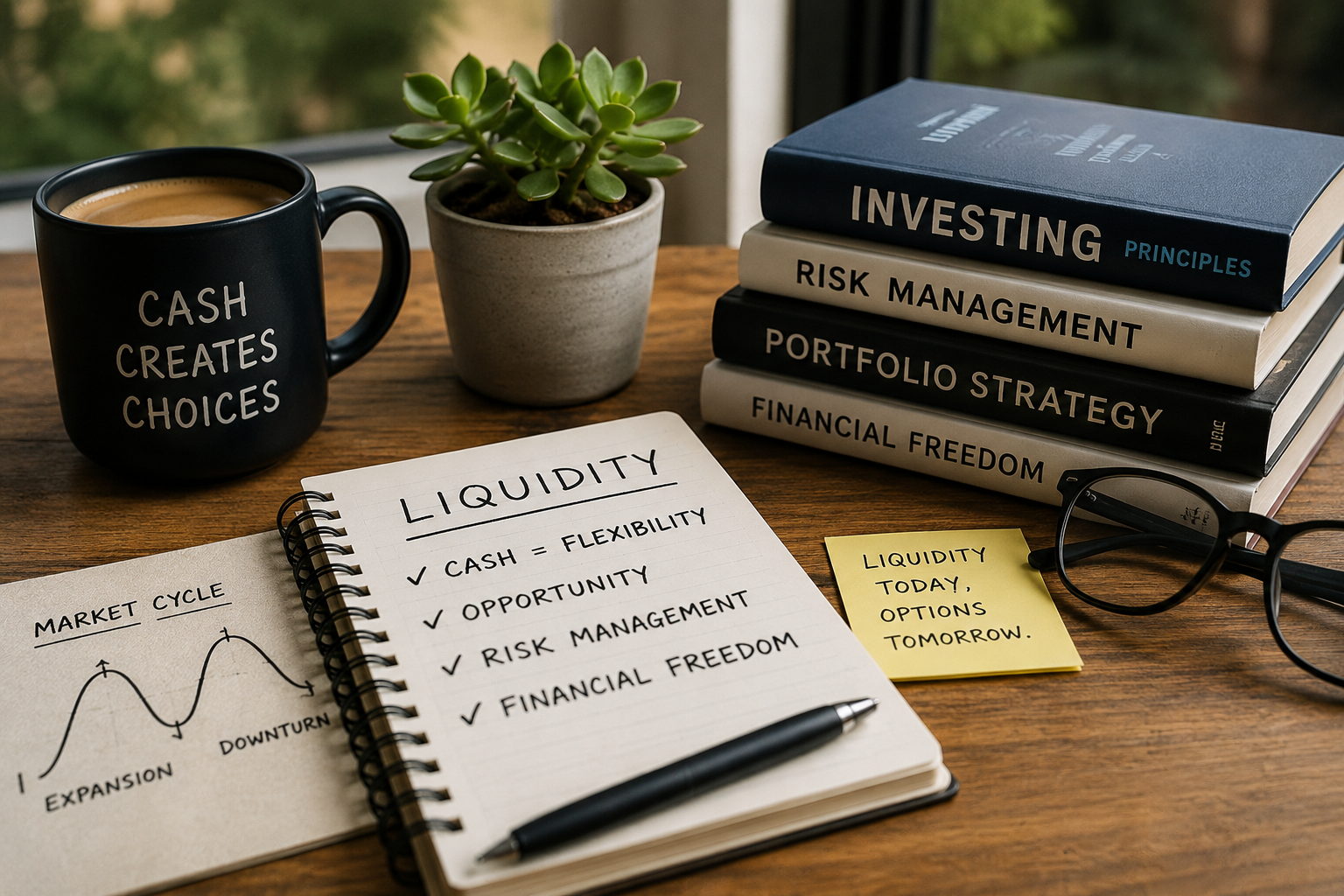
Investors tend to focus on returns, valuations and the direction markets might move next, but another factor can become considerably more important when conditions deteriorate:liquidity. Kavan Choksi highlights an issue that is easy to overlook during calmer periods—the ability to access cash or sell an investment efficiently can matter just as much as the investment’s underlying value when uncertainty rises.
Liquidity is essentially about flexibility. Cash is highly liquid because it can be used immediately, while publicly traded shares in large companies can generally be bought or sold relatively easily. At the other end of the spectrum are assets such as certain properties, private investments or thinly traded securities, where converting an investment into cash may take considerably longer.
The distinction often seems relatively unimportant when markets are functioning normally. It becomes much more noticeable when many investors want to sell at the same time.
The Difference Between Value and Accessibility
An asset can retain significant long-term value while becoming difficult to sell at an attractive price in the short term. This is one of the reasons liquidity deserves to be considered separately from traditional measures of investment performance.
Imagine an investor owns an asset worth $100,000 under ordinary market conditions. If that investor suddenly needs the money, the important question is no longer simply what the asset is theoretically worth. It becomes: how quickly can it actually be converted into $100,000?
If buyers are plentiful, the answer may be straightforward. In a stressed market, however, sellers can outnumber willing buyers. Someone needing immediate access to their capital may have to accept a significantly lower price.
That creates what is often called liquidity risk.
It can affect individual securities, entire asset classes and occasionally even markets that investors normally consider highly liquid.
Why Problems Can Escalate Quickly
Liquidity has an unusual characteristic: investors often value it most precisely when it becomes harder to obtain.
During periods of optimism, holding substantial amounts of cash can feel inefficient. Investors may prefer to have their capital working in assets capable of generating income or appreciation.
The calculation can change abruptly when economic expectations weaken.
Businesses may become more cautious. Investors may attempt to reduce risk. Lenders can tighten their standards. Funds experiencing withdrawals may need to sell investments to meet redemption requests. Individually, these decisions can appear perfectly rational, but collectively they can create pressure.
The problem becomes particularly noticeable when forced selling begins.
An investor who would normally wait for a better price may sell because cash is urgently required. Falling prices can then encourage further selling, while potential buyers may wait in expectation of even lower prices.
Liquidity can therefore influence not only whether assets can be sold, but also how dramatically their prices move.
Cash Has an Opportunity Cost
Recognizing the importance of liquidity does not mean investors should simply keep large portions of their wealth in cash.
There is a trade-off.
Money kept readily available provides security and optionality, but it may also miss opportunities available elsewhere. Over long periods, excessive cash holdings can lose purchasing power through inflation and may produce weaker returns than productive assets.
The aim is therefore not necessarily to maximize liquidity. It is to have enough.
What constitutes “enough” depends heavily on circumstances. Someone with stable income, limited financial obligations and a long investment horizon may be comfortable holding less accessible capital than an investor expecting major expenses in the near future.
This is where liquidity becomes part of portfolio construction rather than simply an emergency measure.
Liquidity Creates Choices
Perhaps the most underappreciated benefit of liquidity is that it allows investors to make decisions rather than having decisions forced upon them.
That difference can be substantial.
An investor with sufficient accessible capital may be able to leave long-term holdings untouched during a downturn. Someone without that buffer could be forced to sell investments when prices are depressed simply to meet other financial commitments.
Liquidity can also provide opportunities.
Periods of market stress sometimes produce attractive prices precisely because other investors need to sell. Having capital available can allow an investor to act when others cannot.
This does not mean trying to predict the exact bottom of a market. Rather, it demonstrates that liquidity has both a defensive and an offensive role. It can provide protection against unexpected needs while preserving the ability to respond when circumstances change.
Thinking About Liquidity Before It Is Needed
One of the difficulties with liquidity planning is that it can appear unnecessary until the moment it becomes essential.
That is why it makes more sense to consider liquidity when constructing a portfolio rather than after markets have already become unsettled. Investors can examine how quickly different holdings could realistically be converted into cash, whether doing so would involve penalties or unfavorableprices, and how much readily available capital they might require under different circumstances.
A portfolio can look diversified on paper while still containing several investments that become difficult to sell simultaneously.
True resilience therefore involves more than spreading money between different assets. It also means understanding how those assets might behave when financial conditions become less comfortable.
Returns will understandably remain one of the principal considerations behind investment decisions. Yet the ability to access capital at the right moment has a value of its own. When markets become unpredictable, liquidity can be what separates an investor who has time to make a considered decision from one who has little choice at all.