Problems a Real Estate Attorney May Identify in a Rent-to-Own Property Agreement
Rent-to-own arrangements appeal to buyers who want a home but aren’t ready to qualify for a mortgage. The agreement allows them to rent the property while working toward a possible purchase, often with additional payments tied to that goal. However, confusing contract terms can leave tenants paying more than expected without securing the ownership rights they believed they were gaining.
Table of Contents
- 1 Rent-to-Own Doesn’t Always Mean the Tenant Must Buy
- 2 Extra Monthly Payments May Not Build the Equity Buyers Expect
- 3 Repair Responsibilities Can Shift Before Ownership Transfers
- 4 Existing Mortgages and Title Problems May Threaten the Future Purchase
- 5 Missing Deadlines Can Cause Buyers to Lose Their Purchase Rights
- 6 Finding Legal Help to Review a Rent-to-Own Agreement
Rent-to-Own Doesn’t Always Mean the Tenant Must Buy
Rent-to-own contracts generally follow different structures, and the distinction affects what happens at the end of the rental period. A lease-option agreement usually gives the tenant the right, but not the obligation, to purchase the property under stated conditions. A lease-purchase agreement may create a binding obligation to buy, depending on its wording. Tenants who assume these arrangements work the same way could face unexpected financial or legal consequences.
A real estate attorney can examine whether the agreement creates an option or a purchase obligation. The review should cover the purchase price, option expiration date, financing conditions, and consequences if the tenant cannot complete the transaction. For example, someone who fails to qualify for a mortgage might lose an option payment under one agreement but face additional contractual claims under another. Understanding the difference before signing can prevent expensive misunderstandings.
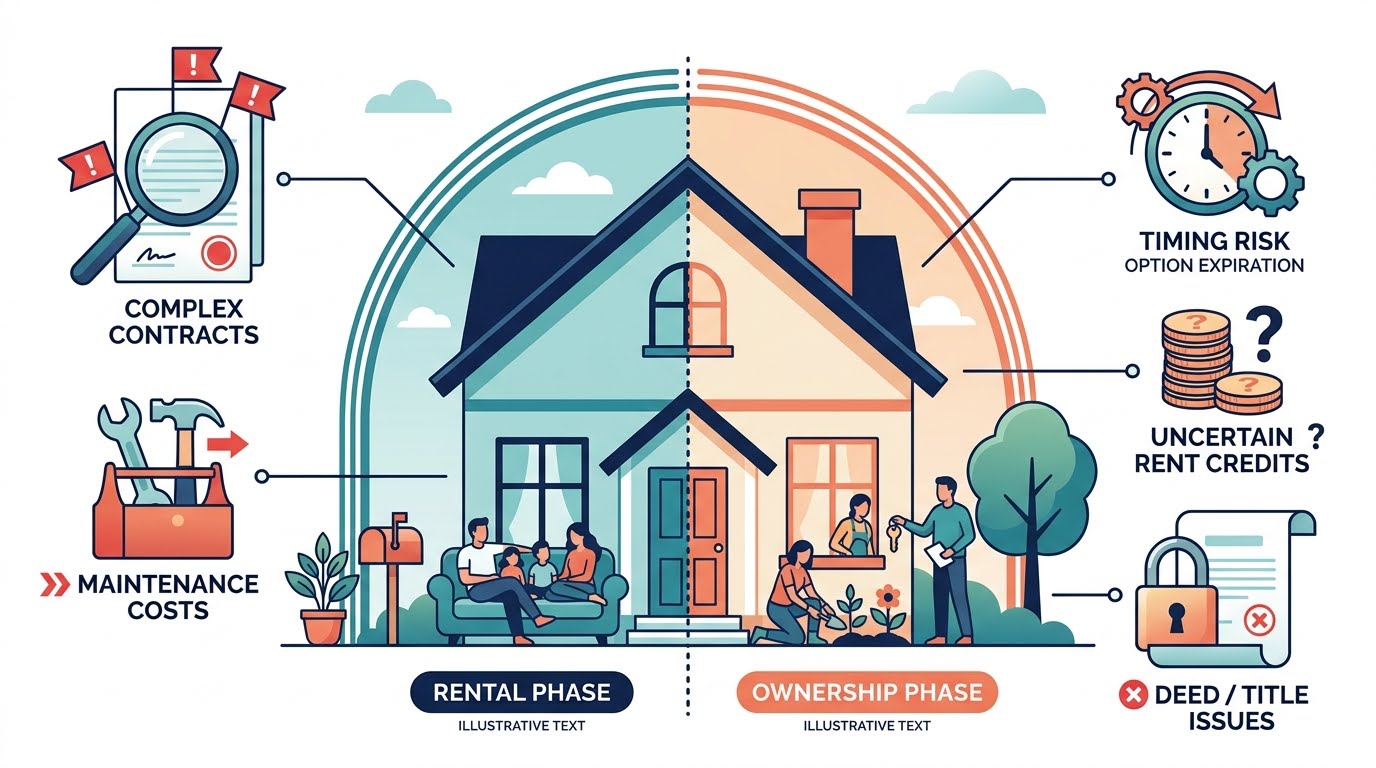
Extra Monthly Payments May Not Build the Equity Buyers Expect
Rent-to-own agreements sometimes require tenants to pay more than the property’s normal monthly rent. The landlord may promise to credit part of that additional payment toward the future purchase price. However, these credits depend on the contract. An agreement might require every payment to arrive on time or cancel accumulated credits after a specific violation.
Buyers should examine how the contract calculates these amounts and whether the credits reduce the purchase price or closing balance. A tenant paying an additional $300 each month could contribute $7,200 over two years, but that money may not create an ownership interest. Clear terms should explain what happens to the payments if the purchase never takes place.
Repair Responsibilities Can Shift Before Ownership Transfers
Traditional rental agreements often place major property maintenance responsibilities on the landlord, subject to applicable law and lease terms. Rent-to-own contracts may attempt to assign certain repairs to the tenant even before the property changes hands. Roof damage, plumbing failures, or heating system replacement could create substantial expenses for someone who doesn’t yet own the home. A real estate lawyer can review these provisions and assess whether they comply with Alabama law.
Existing Mortgages and Title Problems May Threaten the Future Purchase
A landlord offering a rent-to-own arrangement may still have an outstanding mortgage on the property. If the owner falls behind on payments, foreclosure could threaten the tenant’s plans to purchase the home. Existing liens, unpaid taxes, or ownership disputes may also complicate the eventual transfer. Tenants should understand whether the seller can deliver clear title when the purchase date arrives.
Property records deserve attention before someone commits significant money to an option agreement. A title search may reveal recorded claims or restrictions that affect the proposed sale. Buyers can also ask how the agreement handles a foreclosure, property transfer, or other event that prevents the owner from completing the transaction. Written protections are particularly important when the tenant expects to make payments over several years.
Missing Deadlines Can Cause Buyers to Lose Their Purchase Rights
Option agreements often contain strict deadlines for notifying the seller, obtaining financing, and completing the purchase. A tenant may spend years preparing to buy the home but lose the contractual option by missing a required notice date. Even the delivery method can matter if the agreement requires written notice through a particular process.
Financing delays create another concern. Mortgage approval may take longer than expected, especially if the lender questions the property’s value or the tenant’s financial records. Buyers should review extension provisions, notice requirements, and the treatment of option payments if closing cannot occur on schedule. An attorney can help identify terms that deserve clarification or negotiation before the agreement becomes binding.
Finding Legal Help to Review a Rent-to-Own Agreement
Rent-to-own contracts combine rental obligations with possible future ownership rights, making careful document review worthwhile. Buyers should understand the total cost, payment credits, repair responsibilities, and conditions that could end their purchase rights. An attorney familiar with Alabama real estate transactions can explain unclear provisions and assess whether the agreement reflects the parties’ intentions.
The Limestone Benchmark is an online legal directory featuring attorneys serving Athens and Limestone County, Alabama. People considering rent-to-own properties can use its listings to compare local law firms, review their real estate practice areas, and identify attorneys who may assist with contract review, title concerns, and future purchase arrangements.