A Practical Guide To Comparing Long Island, New York Coastal Luxury Home Markets
Long Island’s coastal luxury market is not one market. A harbor-front home on the North Shore, an ocean-oriented retreat on Fire Island, and a bayfront property on the South Shore can offer very different ownership experiences. Buyers who want a grounded local starting point can consult Long Island luxury realtors at The Agency Northeast, a regional real estate platform with community information, listings, and home-search services across Long Island, the North Shore, South Shore, North Fork, and Fire Island.
The right coastal home is rarely defined by the biggest view or the highest asking price alone. It should fit how often you will use it, how much maintenance you are prepared to manage, your comfort with weather exposure, and the community lifestyle you want over the long term.
Table of Contents
Why Long Island Coastal Markets Differ
Two homes may be only a few miles apart yet appeal to entirely different buyers. North Shore communities can attract purchasers looking for protected harbors, boating access, established village settings, and views across Long Island Sound. South Shore and Fire Island locations may place greater emphasis on beaches, bay access, seasonal rhythms, and outdoor recreation. The North Fork offers another mix, including waterfront settings, vineyards, farm stands, and a more rural pace.
Desirability also depends on privacy, beach or marina access, restaurant proximity, travel time, year-round services, and the balance between full-time and seasonal residents. “Luxury” can mean a historic waterfront residence in one community and a newer home with a pool, dock, or private beach access in another.
Compare The Full Cost Of Ownership
A purchase budget should account for recurring and occasional expenses, not simply the closing price. Review property taxes, homeowners coverage, flood and wind coverage where applicable, utilities, landscaping, exterior upkeep, security, and any condominium or homeowners association fees.
Waterfront structures deserve special attention. Seawalls, bulkheads, docks, decks, roofs, drainage features, and salt-exposed windows may require inspections, repair, or replacement over time. A smaller home farther from direct exposure can sometimes have lower annual carrying costs than a larger waterfront home, even if its initial price is higher.
Match The Property Type To Your Lifestyle
Waterfront Estates
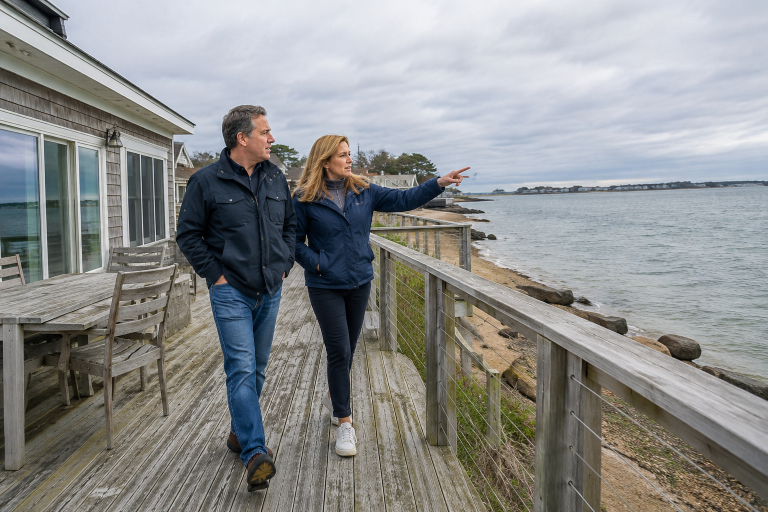
These homes can suit buyers who prioritize direct water access, privacy, boating, and outdoor entertaining. The trade-off may include more complex maintenance, shoreline considerations, higher insurance costs, and greater weather exposure.
Beachside Homes
Beachside ownership suits buyers who want walkable sand access and a strong vacation-home atmosphere. Consider seasonal traffic, sand and salt exposure, parking, rental rules, and whether the neighborhood remains active outside peak months.
Luxury Condominiums
Condos may appeal to buyers seeking amenities, security, and less responsibility for exterior maintenance. Review monthly charges, building insurance, reserve funding, rules for renovations, and the association’s responsibility for major repairs.
Inland Homes Near The Coast
An inland property can provide more land, privacy, or a different level of weather exposure while keeping beaches, marinas, and villages within reach. The compromise may be a longer drive to the water and fewer direct views.
Use Market Data Wisely
Market headlines can be useful context, but they do not establish the value of one specific home. Compare recent closed sales that resemble the property in location, water access, condition, lot characteristics, and amenities. Then review active competition and pending listings to understand what buyers are currently seeing.
- Median sale price and price per square foot
- New listings, active inventory, and months of supply
- Median days on market and sale-to-list price patterns
- Recent waterfront sales compared with inland sales
- Detached-home data compared with condominium data
Separate waterfront homes from non-waterfront homes whenever possible. A broad town-wide average can hide meaningful differences in view quality, shoreline condition, dock rights, privacy, and renovation level.
Review Flood, Storm, And Insurance Risks
Risk research should begin before emotional attachment to a property takes over. Start by reviewing the property’s current flood designation through the FEMA Flood Map, then obtain insurance estimates for that specific address. A map is an important planning tool, but it does not replace an insurer’s underwriting review or a qualified property inspection.
Ask for records of prior storm damage, repairs, claims, permits, and elevation improvements. Inspect the roof, windows, drainage, generator, seawall, dock, bulkhead, retaining walls, and exterior materials. Buyers should also confirm local rules for pools, additions, shoreline work, and docks before assuming future improvements will be possible.
Why Local Knowledge Matters
Local perspective can clarify issues that broad market reports cannot capture, including which streets have stronger resale appeal, where zoning changes by block, how seasonal use affects demand, and whether a listing’s longer marketing time reflects condition, price, or a narrower buyer pool. The Agency Northeast’s coverage of Long Island, North Fork, Fire Island, and shoreline communities can be useful when comparing the practical differences between coastal settings.
A Coastal Buyer Checklist
Before The First Showing
- Set a total ownership budget, including insurance and maintenance.
- Decide whether the home will be full-time, seasonal, or rental use.
- Choose your preferred setting, such as ocean, bay, harbor, or inland-near-coast.
- Identify acceptable travel time, privacy level, and access to services.
During The Showing
- Look for water intrusion, salt damage, drainage issues, and musty odors.
- Ask about roof age, windows, HVAC, generators, and exterior materials.
- Assess road noise, parking, privacy, and seasonal activity.
- Inspect docks, decks, pools, outdoor kitchens, seawalls, and bulkheads.
Before Making An Offer
- Review comparable sales from the same community and property category.
- Request insurance estimates and understand applicable deductibles.
- Confirm zoning, permits, and renovation restrictions.
- Use qualified inspectors and appropriate legal professionals.
Common Questions
Are Coastal Luxury Homes A Good Investment In 2026?
They can be a strong lifestyle purchase, but no coastal property should be treated as a guaranteed investment outcome. Limited waterfront land and sustained buyer interest can support demand, while insurance, maintenance, weather exposure, and resale timing can affect the overall result.
Is Waterfront Property Always More Valuable?
Not always. Direct access and views often command a premium, but value depends on frontage, shoreline condition, privacy, elevation, access, improvements, and buyer demand within the specific community.
Should Buyers Focus On Price Per Square Foot?
Use it as one comparison tool, not a final answer. Lot size, water access, views, architectural quality, condition, and outdoor amenities can make similarly sized homes materially different in value.
What Should Buyers Ask About Insurance?
- What coverage does a lender require?
- Are flood and wind policies separate?
- What deductibles apply to named storms?
- Are docks, seawalls, and detached structures included?
- Has the property had prior claims or significant repairs?
Conclusion
The best Long Island coastal luxury market is not necessarily the most expensive or dramatic one. It is the community and property that align with your lifestyle, ownership budget, risk tolerance, and long-term plans. Careful comparison of local sales, property condition, insurance needs, and community fit can lead to a more confident coastal home decision.