How Waste Accumulation Dictates Septic Tank Pumping Needs
Household waste does more than fill a septic tank; it changes how much room remains for settling, separation, and wastewater flow. Gradual buildup is easy to miss because the system may keep working until solids rise close to the outlet. Understanding what collects inside the tank helps property owners see why septic tank pumping should follow actual waste levels instead of a fixed date alone.
Table of Contents
- 1 Sludge Depth Shows How Much Working Space Remains
- 2 Scum Buildup Can Crowd the Outlet From Above
- 3 Household Habits Change the Speed of Accumulation
- 4 Fine Solids Can Escape Before the Tank Looks Full
- 5 Faster Buildup Often Points to a Change in Use
- 6 Pumping Too Late Can Push Waste Into the Drain Field
- 7 Accurate Pumping Schedules Come From Real Tank Conditions
Sludge Depth Shows How Much Working Space Remains
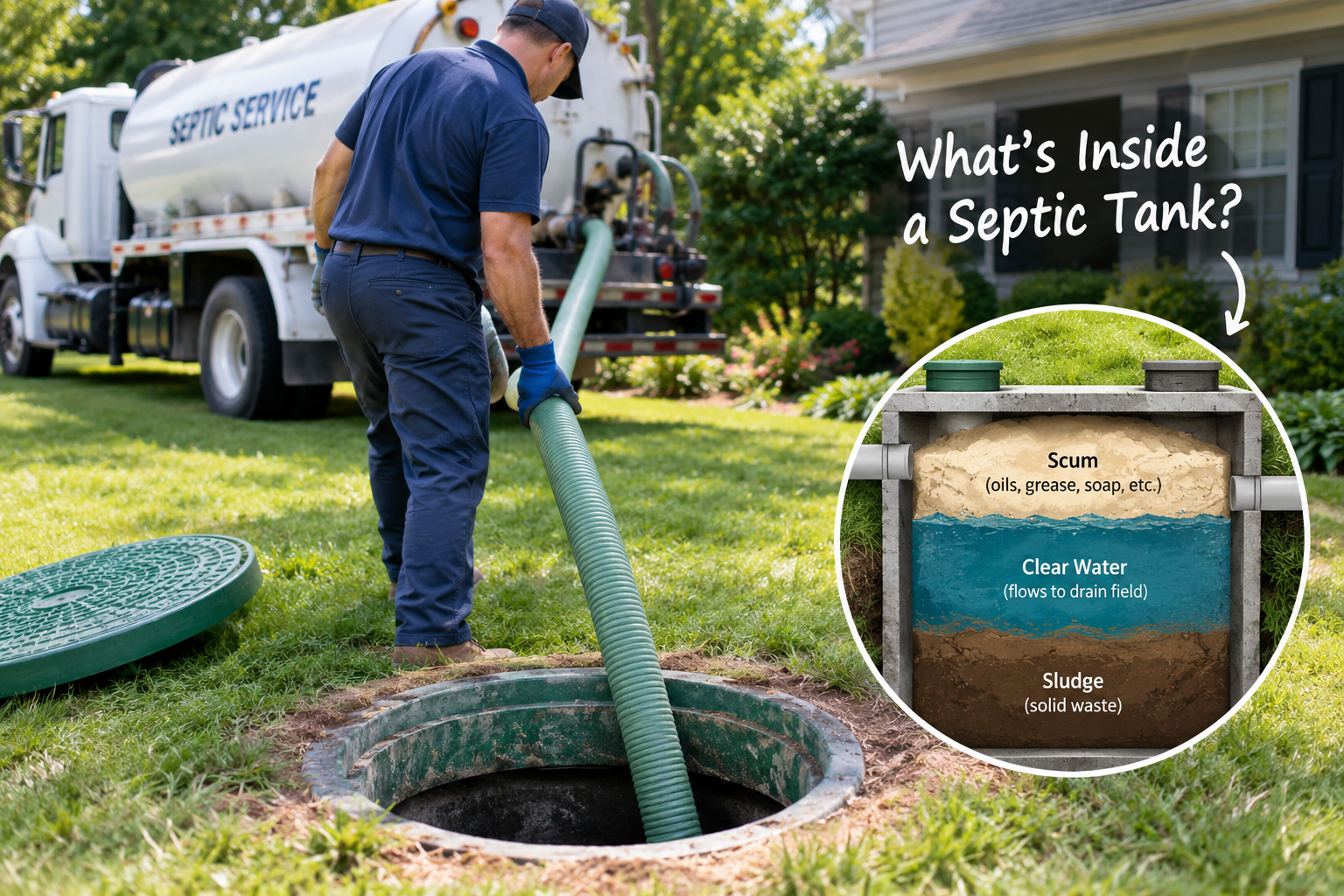
Heavy solids settle at the tank bottom and form a dense sludge layer that grows with daily use. As that layer rises, the tank loses clear space where wastewater needs time to separate before moving toward the drain field.
Technicians can measure sludge depth during septic tank service and compare it with the tank’s size, outlet position, and past records. Those readings show a septic contractor in Huntsville AL whether pumping is due or the system still has enough capacity for normal household flow during periods of heavier household use or changing occupancy levels.
Scum Buildup Can Crowd the Outlet From Above
Grease, oils, soap residue, and floating waste create a scum layer near the top of the tank. Thick scum can approach the outlet baffle, raising the chance that fats and debris will enter pipes meant to carry mostly liquid effluent.
Routine septic tank pumping removes both the floating and settled layers instead of focusing only on what sits at the bottom. Proper removal matters because an overloaded top layer can interfere with separation even before sludge reaches an extreme depth.
Household Habits Change the Speed of Accumulation
Daily behavior has a direct effect on how quickly solids collect. Garbage disposals, frequent cooking, heavy toilet paper use, large families, and repeated laundry loads can increase the amount of material entering the system or reduce the time available for proper settling.
Different homes therefore need different service intervals, even when their tanks are the same size. Providers of septic tank service in Huntsville AL may look at occupancy, water use, food waste, and previous pump dates before suggesting a maintenance schedule that fits the property.
Fine Solids Can Escape Before the Tank Looks Full
Small suspended particles do not always settle quickly, especially when wastewater moves through the tank at a fast rate. Frequent surges from showers, washing machines, and dishwashers can carry those particles toward the outlet before they have enough time to drop into the sludge layer.
Escaped solids can clog filters, distribution lines, and soil pores throughout the drain field. Scheduled septic tank pumping services reduce that risk by restoring settling space, while inspections can reveal whether damaged baffles or excessive water use are contributing.
Faster Buildup Often Points to a Change in Use
Sudden changes in pumping frequency deserve attention because they may reflect more than ordinary tank aging. Added residents, leaking toilets, a new garbage disposal, home-based business activity, or guests staying for long periods can increase waste volume within a short time.
Service records make these shifts easier to spot from one visit to the next. Experienced septic contractor can compare current sludge and scum levels with earlier findings to determine whether the system is filling faster because of household demand or another developing issue.
Pumping Too Late Can Push Waste Into the Drain Field
Overfilled tanks lose the buffer that keeps solids away from the outlet. Once waste begins escaping downstream, the drain field may absorb less water, develop wet patches, produce odors, or send sewage back toward the home during periods of heavy use.
Delaying septic tank pumping in Huntsville AL can therefore turn a routine maintenance need into a larger repair problem. People searching for septic companies near me benefit from choosing providers that measure actual buildup and inspect outlet components instead of waiting for visible failure before recommending service.
Accurate Pumping Schedules Come From Real Tank Conditions
Useful maintenance plans combine waste depth, tank size, household use, system age, and the condition of internal components. Septic tank pumping services in Huntsville AL can use those details to estimate how quickly the tank is filling and whether the previous interval still makes sense for current use.
Rather than treating each property with the same calendar rule, Cora Environmental can help Huntsville-area owners base pumping decisions on what is actually happening inside the tank. That approach helps remove waste before it threatens the outlet, drain field, or everyday reliability of the system over years of normal household use.