Connecticut Housing Market Trends: A Comprehensive Guide for Prospective Buyers
Purchasing a home in Connecticut is an exciting journey, but staying informed about current market trends is crucial. This guide provides insights into the state’s housing landscape, helping you make well-informed decisions. For personalized assistance, consider consulting the West Hartford real estate experts Gagliardi Team. Led by Dawn Gagliardi, Esq., a top-ranked agent in Hartford County, the team offers extensive knowledge of the local market and a commitment to client advocacy.
Table of Contents
Current Market Overview
As of March 2026, Connecticut’s housing market has seen a 5.4% year-over-year increase in home prices, with the median sale price reaching $444,100. However, the number of homes sold has decreased by 3.8%, and the number of homes for sale has dropped by 11.3%, indicating a tightening market.
Compared to previous years, this steady climb in prices demonstrates a sustained demand for homes across the state, despite the slowing pace of sales volume. Such patterns are particularly evident in suburban communities where demand is fueled by relocations from more crowded metropolitan areas, improved remote work flexibility, and the state’s appealing lifestyle amenities. Connecticut’s blend of coastal, urban, and rural communities continues to attract a diverse range of buyers, from first-time homeowners to retirees seeking quieter suburbs or desirable countryside retreats.
Mortgage Rates and Affordability
In December 2025, mortgage rates declined to 6.19% for a 30-year fixed loan, down from over 7% earlier in the year. This reduction has renewed interest in homebuying, though affordability remains a challenge due to high home prices and limited inventory.
Many potential buyers in Connecticut are carefully monitoring mortgage rates, as fluctuations can significantly impact monthly payments and overall affordability. While declining rates can make homeownership more attainable, the persistent rise in property values continues to place pressure on entry-level buyers. Households must factor in both principal and interest payments, as well as increases in property taxes and homeowners’ insurance premiums, which are subject to periodic review and adjustment. It is advisable to use online mortgage calculators to estimate long-term costs before making an offer, and to consider programs such as first-time homebuyer tax credits and down payment assistance available from Connecticut Housing Finance Authority (CHFA) or local lenders.
Regional Variations
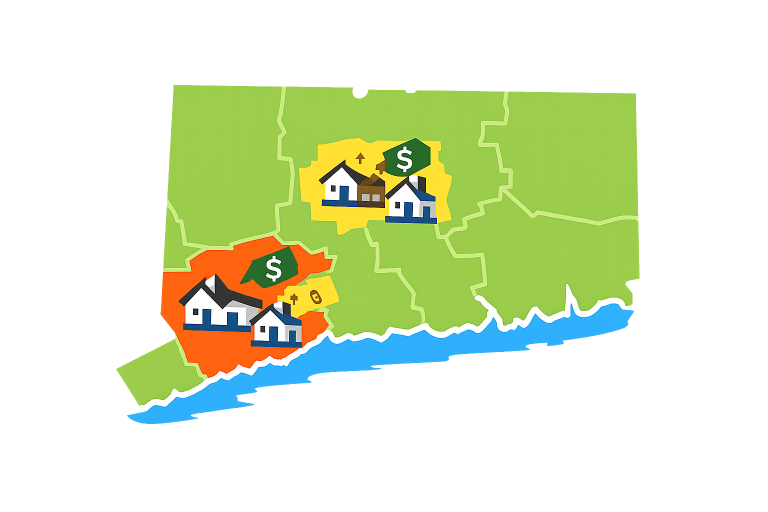
Connecticut’s housing market varies by region. For instance, in Norwalk, the median sale price recently decreased by 2.7% from the previous month and 4.1% compared to last year, now at approximately $815,000. Inventory has dropped 34% month-over-month, and homes are taking longer to sell, averaging 46 days on the market.
Other regions, such as Fairfield County and the New Haven area, have shown contrasts to this trend, with some towns reporting even higher median price increases and swifter transactions. In central Connecticut, particularly in communities like West Hartford, the market remains fiercely competitive. Homes in sought-after school districts or with popular amenities such as updated kitchens, large yards, or energy-efficient upgrades can spark bidding wars and sell well above asking price. Meanwhile, more rural counties may offer moderately priced properties and longer days on market, providing alternative opportunities for buyers willing to expand their search area.
Inventory Challenges
The state faces a tight housing supply, with only 8,185 homes for sale in March 2026, down 11.3% year-over-year. This limited inventory contributes to competitive bidding and higher prices, making it essential for buyers to act swiftly when they find suitable properties.
Low inventory levels are partly fueled by homeowners choosing to stay put, particularly those with lower locked-in mortgage rates from previous years. Turnover is also limited in popular communities with low crime rates, attractive downtowns, and strong school systems, where residents are less likely to sell. Builders and developers continue to face challenges with zoning restrictions, construction labor shortages, and rising material costs, all of which delay the addition of new homes to the market. As a result, many buyers are adjusting their expectations, compromising on square footage, considering older homes requiring updates, or looking in neighboring towns for better availability.
Tips for Prospective Buyers
- Get Pre-Approved: Secure financing early to strengthen your offer.
- Be Flexible: Consider various property types and locations to increase options.
- Act Quickly: In a competitive market, prompt decisions are crucial.
Additionally, consider lining up all necessary documentation, such as proof of funds, tax returns, and credit reports, in advance. Look for properties with the help of tools like virtual tours, which can help you evaluate more homes remotely and narrow down your choices. Attend open houses when possible and keep an open mind about older homes with good bones or homes in up-and-coming neighborhoods that may provide future value appreciation. If you’re a first-time buyer, researching state and local incentives and seeking advice on negotiation strategies can help give you an edge when you spot the right property.
Working with Local Experts
Partnering with experienced real estate professionals can provide valuable insights and guidance. For example, the West Hartford real estate experts Gagliardi Team offer extensive knowledge of the local market, assisting buyers in navigating the complexities of purchasing a home in the area.
Local agents are especially adept at identifying hidden gems, understanding micro-market trends, and recommending reliable mortgage providers, inspectors, and contractors. They also have insight into upcoming listings that may not yet be widely advertised, giving you an early advantage. Moreover, skilled real estate professionals can guide you through negotiations, orchestrate effective bidding strategies, and handle the documentation process, smoothing out what can often feel like an overwhelming experience for buyers, especially in competitive markets. Establishing a strong rapport with your agent can ensure your preferences, budget, and long-term plans are fully represented throughout the process.
Conclusion
Understanding Connecticut’s current housing trends is vital for making informed decisions. By staying updated on market conditions, mortgage rates, and regional variations, and by collaborating with knowledgeable professionals, you can successfully navigate the home-buying process in the state.
The local real estate landscape is ever-evolving, influenced by factors such as economic growth, demographic changes, and new development projects. As you begin your search, staying flexible and being prepared will serve you well. With research, careful planning, and the support of dedicated experts, finding a home that matches both your needs and your budget in Connecticut is well within reach. Remember, patience and persistence are key, and every challenge in the process brings you one step closer to homeownership in this dynamic and desirable state.