Sustainable Waste Solutions for Businesses: Strategies, Technologies, and Partnerships
In an era where environmental responsibility shapes business decisions and consumer outlooks, sustainable waste management practices have become essential. Companies of all sizes are searching for ways to minimize waste, conserve resources, and remain compliant with regulations. Many organizations are turning to commercial dumpster rental services as an efficient solution to manage large volumes of waste while ensuring sustainable practices.
Addressing waste management from a sustainability perspective not only reduces a company’s ecological impact but can also lead to measurable benefits. Cost savings, operational efficiencies, and an enhanced public image are just a few of the advantages businesses experience as a result of adopting eco-friendly waste policies.
Sustainable waste management extends well beyond simply sorting recyclables. It is about implementing a holistic approach across all operations to reduce waste generation, reuse valuable materials, and facilitate effective recycling streams. By examining these strategies and exploring the latest advancements, businesses can take actionable steps toward their sustainability goals.
For organizations needing comprehensive cleanouts or targeted decluttering, specialized junk removal services provide the expertise and flexibility that go hand in hand with achieving zero-waste targets.
Table of Contents
Understanding Sustainable Waste Management
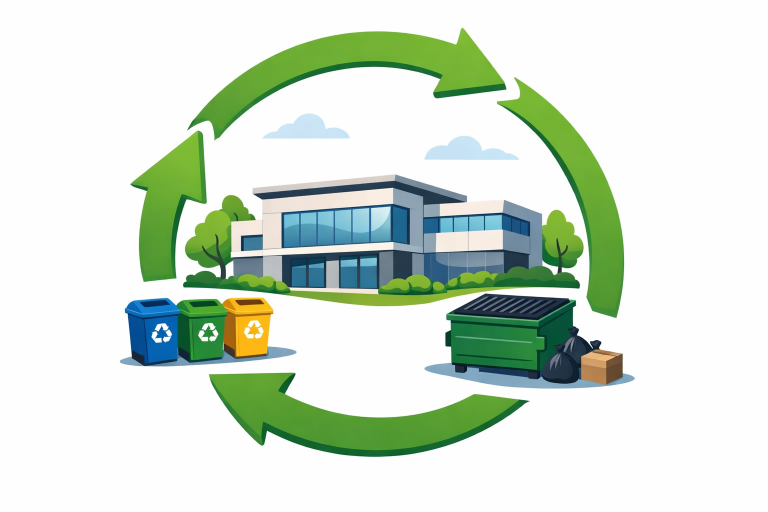
Sustainable waste management begins with a focus on reducing the generation of waste in the first place. Organizations are adopting smarter procurement policies, encouraging reusable packaging, and rethinking processes to keep materials in use for as long as possible. The goal is to foster a circular economy where waste is continuously cycled back as valuable input for new products, minimizing the need for raw resources and reducing the strain on landfills.
This approach is not just environmentally prudent. It is also increasingly demanded by consumers, investors, and regulators who expect higher standards of corporate responsibility. For many businesses, integrating sustainability into waste management is becoming synonymous with good business practice.
Innovative Programs Supporting Waste Reduction
Across the market, several initiatives champion sustainable business practices. For example, the Thrive™ program by Kimberly-Clark Professional demonstrates how companies can modernize facilities while diverting significant volumes of waste from landfill streams. Discarded bathroom dispensers collected through such programs are repurposed as raw materials for new construction, helping to close the material loop. Programs like these illustrate how innovation and sustainability can work together to achieve tangible results.
Technological Advancements in Waste Sorting
Cutting-edge technology is transforming traditional waste management practices. Artificial intelligence and machine learning systems now enable businesses to track contamination and enhance material recovery rates during collection. For instance, real-time contamination sensors fitted to refuse trucks identify incorrect waste disposal as it happens, allowing immediate corrective action and improved downstream recycling rates. Artificial intelligence not only minimizes errors and increases efficiency but also helps organizations monitor their waste streams more closely and make data-driven sustainability decisions.
Collaborations for Effective Recycling
Building relationships with other organizations is a proven way to bolster waste reduction initiatives. When businesses partner with industry experts and innovative programs, they gain access to custom recycling solutions tailored to their specific waste challenges. Workplace collaborations offer collection containers, reporting, and best practices to make recycling accessible. Through shared efforts and pooled expertise, even resource-constrained businesses can participate in impactful sustainability campaigns.
Implementing a Zero-Waste Strategy
Conducting a Waste Audit
The first step toward zero-waste is understanding exactly what types and quantities of waste your business produces. Conducting a thorough waste audit can reveal inefficiencies and highlight areas for material reuse or recycling.
Setting and Tracking Goals
Establishing clear and measurable waste reduction goals is crucial. Whether a company aims to recycle 75% of its waste within a year or eliminate single-use plastics, setting specific targets ensures that progress can be tracked and adjustments made as needed.
Employee Engagement and Education
Staff participation is key to successful waste reduction. Providing training sessions, incentives, and making recycling bins easily accessible helps foster an organizational culture of sustainability. Consistent communication ensures everyone remains engaged and motivated.
Partnering with Service Providers
Working with specialized waste management providers brings valuable expertise and resources to a company’s sustainability initiatives. These providers can help design and roll out effective recycling programs tailored to business operations.
Ongoing Improvement
Finally, sustainability is an evolving process. Collect feedback, review results regularly, and continuously pursue new methods and partnerships to maximize waste diversion rates and minimize environmental impact.
Benefits of Sustainable Waste Management
- Environmental Protection: Reducing waste helps conserve ecosystems and limits pollution.
- Cost Efficiency: Streamlined waste systems lower disposal expenses and may reduce overhead costs.
- Stronger Brand Reputation: Demonstrating commitment to environmental responsibility can attract customers and investors.
Conclusion
Adopting sustainable waste management solutions delivers benefits that extend beyond environmental stewardship. Through the thoughtful application of new technologies, strategic partnerships, and a commitment to continuous improvement, businesses can meet evolving expectations, gain competitive advantages, and play a meaningful role in creating a sustainable future. Proactive waste management, supported by services like commercial dumpster rental and junk removal, sets a strong foundation for environmentally sound business growth.