The Cash-Flow Checkup: When Interest-Bearing Checking Makes Sense, and When It Doesn’t
Interest-bearing checking has become more appealing to people who want their everyday cash to do more than sit idle. Unlike a standard transaction account that may pay little or no interest, high yield checking accounts can pair routine banking features with the opportunity to earn a return on money set aside for rent, utilities, groceries, and other near-term needs.
That convenience raises an important question: will the account work with the way you already manage your money? A useful checking account should make paying bills and tracking spending easier. If earning the top rate requires behavior you would not normally maintain, the benefit may be smaller than it first appears.
Table of Contents
- 1 Why Checking Accounts Deserve a Closer Look
- 2 What Interest-Bearing Checking Actually Does
- 3 Where the Value Comes From
- 4 The Conditions Behind the Headline Rate
- 5 How to Calculate the Real Benefit
- 6 When Interest-Bearing Checking May Be a Good Fit
- 7 When Another Option May Work Better
- 8 Checking Versus Other Cash Accounts
- 9 A Five-Step Account Review
- 10 Final Decision: Is It Worth the Effort?
Why Checking Accounts Deserve a Closer Look
Many households keep a meaningful buffer in checking so scheduled payments clear on time and unexpected expenses do not cause a shortfall. When that balance remains fairly steady, earning interest can be worthwhile because the money is already serving a day-to-day purpose.
Still, checking accounts are not interchangeable. Banks and credit unions can structure rates, qualifications, fees, and eligible balances differently. Before opening an account, it is wise to compare checking account fees and terms based on how you actually bank, rather than on a headline APY alone.
What Interest-Bearing Checking Actually Does
An interest-bearing checking account is a transaction account that pays interest on eligible funds. It generally includes familiar tools such as a debit card, online bill pay, electronic transfers, mobile check deposit, account alerts, and ATM access.
APY is the annualized measure used to show what a balance could earn over a year, including the effect of compounding. It is not necessarily the same as the account’s stated interest rate. More importantly, the APY may apply only when the account holder meets the stated conditions, and only to a portion of the balance.
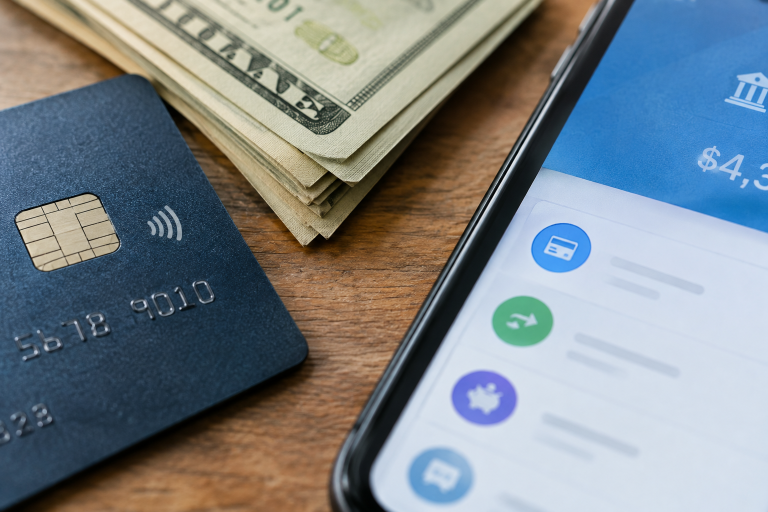
Some accounts pay interest directly into a checking account. Others offer cash-back rewards or move rewards to a linked savings account. Those structures can still be useful, but they should not be treated as identical. Read the account disclosure to determine where earnings go, how they are calculated, and whether a monthly qualification period applies.
Where the Value Comes From
Keeping Everyday Cash Productive
The central appeal is simple: money needed for normal spending may earn interest without being transferred out of checking before every payment. This can reduce the need to choose between liquidity and a return on a stable cash cushion.
Maintaining Easy Access
Checking is designed for frequent use. For someone who pays bills electronically, uses a debit card, occasionally withdraws cash, or transfers money between accounts, that access can matter more than a slightly higher rate elsewhere.
Using Digital Tools
Alerts for low balances, upcoming payments, deposits, and large transactions can help account holders avoid mistakes. Automatic transfers can also help maintain a preferred checking balance while moving excess cash to savings.
Confirming Deposit Protection
Insurance matters as much as yield. At an FDIC-insured bank, deposit insurance generally covers up to $250,000 per depositor, per insured bank, per ownership category. Credit union deposits may be covered through the NCUA instead. Account holders should verify the institution’s insurance status and consider all deposits held at that institution when reviewing coverage.
The Conditions Behind the Headline Rate
High APYs often come with monthly qualification rules. Common requirements include:
- Receiving a qualifying direct deposit.
- Completing a minimum number of debit card purchases.
- Enroll in electronic statements.
- Maintaining a minimum balance.
- Logging in to online or mobile banking.
- Keeping the qualifying balance below a stated cap.
Missing one requirement may result in a lower rate, no interest for that cycle, or a monthly service fee. The key is to distinguish effortless qualifications from tasks that require changing your spending or payroll routine.
How to Calculate the Real Benefit
Start with the average balance you expect to keep in checking, not the highest balance you might briefly hold. Then estimate the annual interest by multiplying that balance by the APY. If the top rate applies only up to a balance limit, calculate the qualifying portion separately and use the lower rate, if any, for the remainder.
For example, a 3% APY on a consistent $5,000 balance would amount to roughly $150 over one year, before accounting for changes in the rate or balance. A monthly fee of $10 would total $120 annually, leaving far less net value. ATM charges, overdraft fees, and missed qualification periods can further narrow the benefit.
When Interest-Bearing Checking May Be a Good Fit
- You maintain a predictable balance for regular expenses.
- Your paycheck already arrives through direct deposit.
- You naturally make enough debit card purchases to qualify.
- The account has no monthly maintenance fee, or you can reliably avoid it.
- The ATM network, transfer options, and mobile tools fit your routine.
- You want access to the money without committing it to a set term.
When Another Option May Work Better
- Your checking balance is usually low, or it fluctuates quickly.
- You would need to make unnecessary purchases to qualify for interest.
- The top APY applies only to a small balance cap.
- Fees would offset much of the expected interest.
- You need in-person access to a branch that the provider does not offer.
- The money is intended mainly for emergencies, a near-term goal, or longer-term savings.
Checking Versus Other Cash Accounts
- Interest-bearing checking: Best for daily spending and accessible cash. The trade-off may be activity rules or balance limits.
- High-yield savings: Often better for emergency reserves and short-term goals. It may offer fewer payment tools than checking.
- Money market accounts: Can suit larger cash balances and may offer limited transaction access. Minimum balance requirements may apply.
- Certificates of deposit: Can fit money that will not be needed for a defined period. Early withdrawals may trigger a penalty.
A Five-Step Account Review
- Read the rate disclosure: Determine whether the APY is variable and whether the institution can change it.
- List every requirement: Include direct deposit, debit transactions, electronic statements, and balance rules.
- Check the balance cap: Find the maximum amount eligible for the top rate.
- Review all fees: Look beyond maintenance charges to ATM, overdraft, transfer, and other possible costs.
- Test practical fit: Confirm that customer service, ATM access, app features, and transfer timing meet your needs.
Final Decision: Is It Worth the Effort?
An interest-bearing checking account can be a practical upgrade when its requirements align with your existing habits. It may be less attractive when the account depends on extra spending, high balances, or monthly tasks that are easy to overlook.
Review the net annual benefit alongside convenience, fees, insurance, and access. A slightly lower rate with simple rules can be more valuable than a higher advertised rate that requires constant attention.