Eco-friendly Pest Management Solutions
Table of Contents
Eco-friendly Pest Management Solutions
Pest management is a critical aspect of any environment, be it agricultural, residential, or commercial. Traditional pest control methods often rely heavily on chemical pesticides, which can be effective but come with a slew of environmental and health concerns. As awareness about these issues grows, there is increasing demand for eco-friendly pest management solutions that provide effective control while minimizing harm to the environment and non-target organisms.
The Environmental Impact of Conventional Pest Control
Conventional pest control methods typically involve the use of synthetic chemicals designed to kill or repel pests. While effective, these chemicals can have unintended consequences. They often do not discriminate between harmful pests and beneficial organisms, potentially disrupting local ecosystems. Furthermore, the runoff from agricultural areas can contaminate waterways, affecting aquatic life and potentially entering drinking water supplies.
Additionally, pests can develop resistance to chemical pesticides over time, necessitating the use of even stronger or more toxic substances. This cycle not only harms the environment but also increases the costs and complexity of pest management.
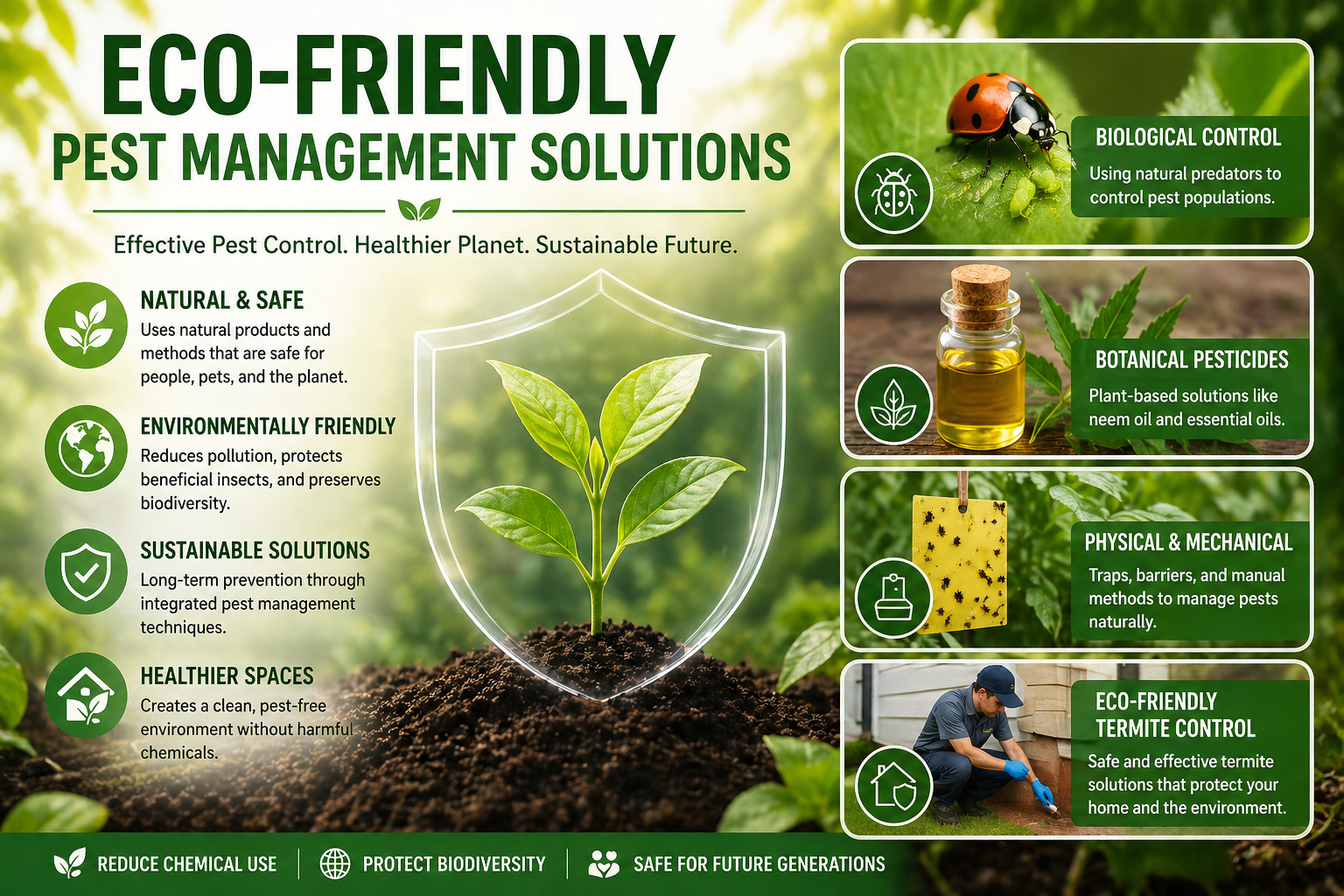
Principles of Eco-friendly Pest Management
Eco-friendly pest management, often referred to as Integrated Pest Management (IPM), combines various practices and tools to manage pest populations in an environmentally sensitive manner. IPM emphasizes the following principles:
- Prevention: The first line of defense involves cultural practices that make environments less conducive to pests. This can include crop rotation, proper waste management, and maintaining healthy soil and plants.
- Monitoring: Regular monitoring of pest populations helps in making informed decisions about whether and when to take action, preventing unnecessary interventions.
- Control: When intervention is necessary, IPM prioritizes the use of biological controls like natural predators or biopesticides before resorting to chemical options.
Examples of Eco-friendly Pest Management Techniques
There are various techniques employed in eco-friendly pest management that are proving to be effective alternatives to chemical pesticides:
Biological Control
This method uses natural predators or parasites to control pest populations. For example, ladybugs can be used to manage aphids, and certain nematodes can target soil-dwelling pests. These natural enemies are carefully selected to ensure they do not become invasive themselves.
Botanical Pesticides
Derived from plants, botanical pesticides like neem oil or pyrethrum offer a natural alternative to synthetic chemicals. They often degrade more quickly in the environment, reducing the risk of long-term contamination.
Physical and Mechanical Control
Techniques such as traps, barriers, and manual removal can effectively reduce pest populations without chemicals. For example, pheromone traps can attract and capture pests like moths, while row covers can protect crops from insect invasions.
Termite Control
For those dealing with termite infestations, seeking local, eco-friendly solutions is crucial. Companies specializing in environmentally safe termite management can provide effective treatments while preserving the ecosystem. If you’re searching for Termite control near me, consider providers that emphasize eco-friendly methods.
The Future of Pest Management
As we look to the future, the development of eco-friendly pest management solutions will be critical in meeting the growing demand for sustainable agricultural and pest control practices. Advances in technology, such as precision agriculture and genetic research, hold promise for even more targeted and effective eco-friendly pest management strategies.
Ultimately, the shift towards sustainable pest management is not just beneficial for the environment, but it can also lead to healthier communities and more resilient ecosystems. By continuing to innovate and prioritize eco-friendly practices, we can effectively manage pests while safeguarding our planet for future generations.