Managing Online Presence for Service Businesses
Table of Contents
- 1 The Shift from Management to Online Reputation and Marketing
- 2 Navigating the AI Search and Answer Engine Era
- 3 The Economics of Customer Reviews: Volume, Recency, and Sentiment
- 3.1 Review Metric Impact on Local Search Rankings Impact on Customer Trust Impact on Conversion Rates Average Star Rating Strong (especially 4.0+) Very Strong (threshold effect) High (direct correlation) Review Volume Strong (signals activity/popularity) Strong (more data, higher confidence) Moderate to High Review Recency Very Strong (freshness signal) Very Strong (relevance, current quality) High (reduces perceived risk) Review Sentiment Moderate (AI analysis of keywords) Very Strong (qualitative evaluation) High (influences perception of service) Best Practices for Review Responses
- 3.2 Leveraging Reviews as User-Generated Content
- 3.3 Employer Branding and Talent Acquisition
- 4 Frequently Asked Questions About Online Presence
- 5 Conclusion
The Shift from Management to Online Reputation and Marketing
In the dynamic digital landscape of June 2026, understanding the nuances between Online Reputation Management (ORM) and Online Reputation Marketing is paramount. While often used interchangeably, these two concepts represent distinct, yet complementary, approaches to shaping your brand’s digital presence.
Online Reputation Management (ORM) is traditionally seen as a defensive strategy. Its primary goal is to monitor, protect, and repair a brand’s online image. This involves actively tracking mentions across review platforms, social media, news sites, and search results, and then addressing negative content or misinformation. Think of ORM as damage control and ongoing maintenance—ensuring that existing perceptions are not unduly harmed. For instance, a business might engage in ORM to address a sudden influx of negative reviews or to suppress an outdated, unfavorable news article from appearing prominently in search results.
In contrast, Online Reputation Marketing takes a proactive, offensive stance. It’s about deliberately building, promoting, and leveraging a positive brand narrative to attract new customers and drive growth. This isn’t just about reacting to what’s being said; it’s about actively generating positive content, encouraging customer advocacy, and strategically showcasing excellent feedback to enhance brand perception. It transforms reputation from a vulnerability into a powerful marketing asset. For businesses looking to understand the full spectrum of strategies involved in proactively building and defending their brand’s digital image, exploring resources dedicated to online reputation and marketing can provide invaluable insights.
For service businesses, this distinction is crucial. For example, a specialized service like pest control has unique reputation challenges, as outlined in our Pest Control Reputation Management Guide. Similarly, roofing contractors face specific considerations when managing their online image, which can be explored in detail within our Roofing Reputation Management resources. Both industries benefit from understanding when to defend and when to strategically market their reputation.
Proactive Online Reputation and Marketing Strategies
A robust online reputation marketing strategy is built on several key pillars designed to actively cultivate a positive brand image.
Review Generation: Actively soliciting reviews from satisfied customers is foundational. As of June 2026, consumers read an average of 10 reviews before trusting a business, and 70% of customers will review a business when asked. Strategic review generation ensures a steady stream of fresh, positive feedback. For HVAC businesses, understanding how to effectively manage and generate reviews is key, as detailed in our guide to HVAC Review Management. It’s also vital to know How to Access GBP Reviews to monitor and respond effectively.
Owned Content: Creating and distributing high-quality, authoritative content on your own platforms (website, blog, social media) allows you to control your narrative. This includes case studies, expert articles, FAQs, and behind-the-scenes glimpses that showcase your expertise and values. This content not only builds trust but also provides valuable material for AI search engines.
Local SEO: For service businesses, local search engine optimization is indispensable. This involves optimizing your Google Business Profile (GBP), ensuring consistent Name, Address, Phone (NAP) information across all directories, and generating location-specific reviews. A strong local SEO presence means your business appears prominently when customers in your service area search for your offerings. Data-driven approaches are increasingly important here, as highlighted by effective strategies in Data-driven pest control marketing.
Earned Media: Securing mentions, features, or interviews in reputable industry publications, local news outlets, or influential blogs can significantly amplify your brand’s credibility. Earned media acts as a powerful third-party endorsement, building trust and authority that owned content alone cannot achieve.
Defensive Reputation Management Tactics
While proactive strategies build reputation, defensive tactics are crucial for safeguarding it. These are the ORM components that kick in when negative sentiment arises or a crisis looms.
Crisis Mitigation: Despite best efforts, negative situations can arise. A well-defined crisis communication plan is essential, outlining who responds, what channels are used, and the approved messaging. The goal is to respond swiftly, transparently, and empathetically to control the narrative and minimize long-term damage.
Review Suppression: When genuinely harmful or misleading content appears, suppression techniques aim to push it down in search results by creating and promoting a larger volume of positive, authoritative content. This isn’t about deletion (which is rarely possible for legitimate content) but about algorithmic displacement.
Monitoring Alerts: Continuous monitoring of your brand mentions across the web is the bedrock of defensive ORM. Tools like Google Alerts, Brand24, or Mention provide real-time notifications for new reviews, social media mentions, or news articles. This allows for rapid response, especially crucial given that 42% of consumers complaining on social media expect a response within an hour. It also helps in identifying and addressing potential threats, such as the alarming trend of scams targeting local businesses, as detailed in our guide to Protect Your Business: The Google Maps Pin Scam Explained.
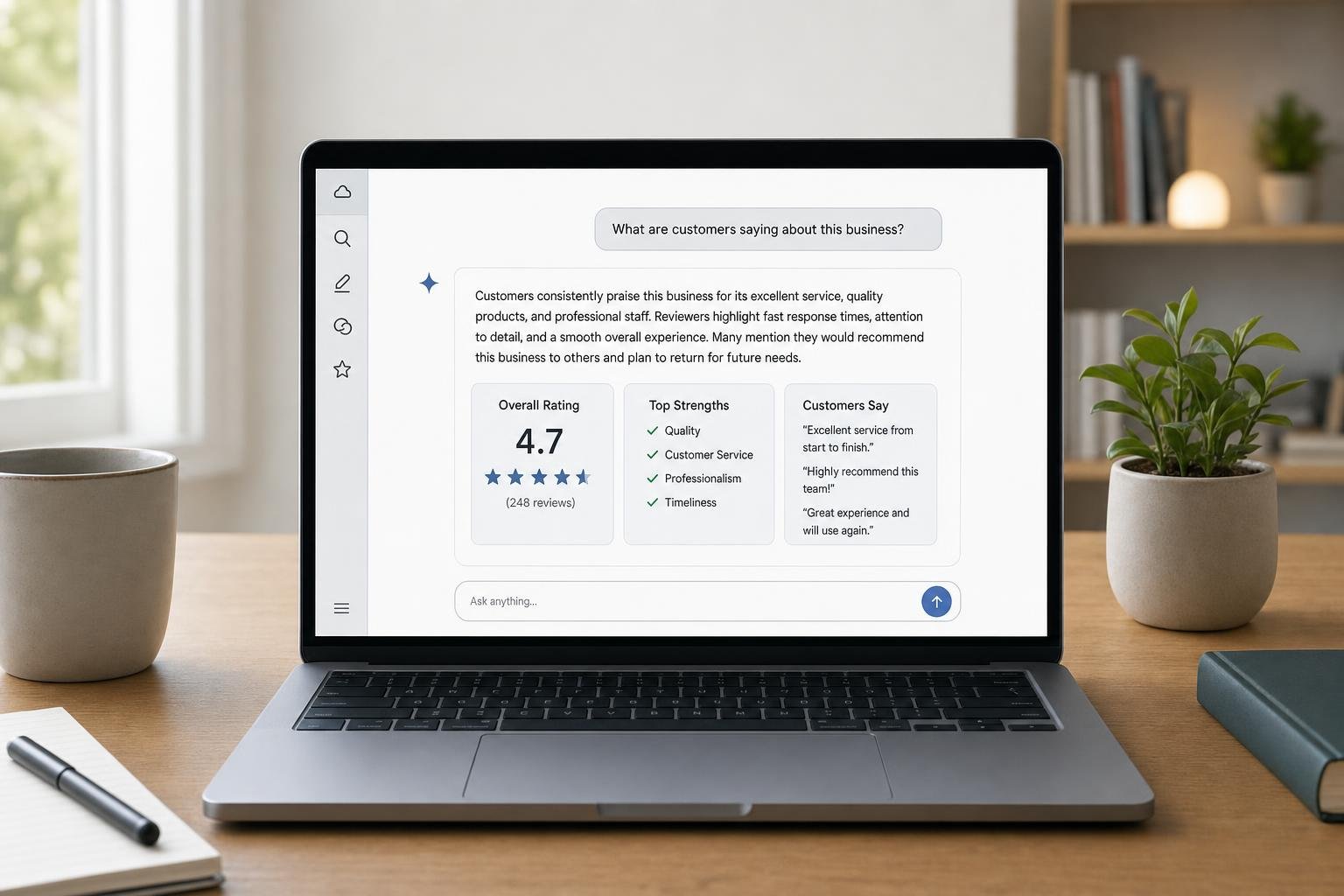
The landscape of online discovery has undergone a profound transformation by June 2026, largely due to the pervasive influence of AI search engines and answer engines. Customers are increasingly starting their journey not with a list of links, but with an AI-generated answer. These sophisticated systems, powered by Large Language Models (LLMs), synthesize information from across the web—including reviews, articles, forums, and your own website—to provide direct, concise answers to user queries.
This shift means that your brand’s online reputation is no longer just about ranking highly in traditional search results; it’s about being accurately and positively represented in these AI-driven summaries. If an AI search engine misrepresents your services or highlights negative sentiment, it can compress the path to purchase to zero, eliminating your business from consideration before a customer even sees your website. The concept of “GEO” (Generative Engine Optimization) is emerging, focusing on optimizing content for these AI systems. Our insights on The Role of Brand Authority and E-E-A-T in the AI Search Era offer a deeper dive into how expertise, experience, authoritativeness, and trustworthiness are more critical than ever.
Optimizing for AI-Driven Online Reputation and Marketing
To thrive in this AI-first environment, businesses must adapt their reputation strategies:
Entity Correction: AI models learn about your brand by identifying “entities”—your business name, key personnel, products, and services. Ensuring consistent, accurate information about these entities across all online sources is vital. If AI systems encounter conflicting data, it can lead to “hallucinations” or incorrect descriptions of your brand. Proactive entity management helps AI accurately understand and represent your business.
Schema Markup: Implementing structured data (schema markup) on your website provides explicit signals to search engines and AI systems about the meaning and relationships of your content. This can include marking up reviews, business information, services, and FAQs, making it easier for AI to extract and present accurate details about your offerings.
Community Signals: AI models increasingly value community-generated content. Unlinked third-party mentions in forums, social media discussions, and review sites correlate strongly with AI citations. Platforms like Reddit, where 47% of top-10 cited sources on Perplexity are Reddit threads, have become significant sources of truth for AI. Cultivating positive discussions and authentic engagement in these spaces is crucial. Our insights on The Power of Authenticity in Social Media are more relevant than ever in this context.
Reddit Threads: Negative Reddit threads can rank highly for branded searches and influence AI summaries. Proactive reputation marketing now involves monitoring these communities and, where appropriate, contributing positively or encouraging advocates to share their experiences to balance the narrative.
Google Verification and Local Trust Signals
Google continues to evolve its trust signals, especially for local service businesses. In June 2026, these signals play a pivotal role in how customers discover and evaluate your brand.
Google Verified Badge: The introduction of the Google Verified Badge, replacing Google Guaranteed, signifies Google’s commitment to providing consumers with trustworthy service providers. This badge acts as a strong local trust signal, indicating that a business has undergone Google’s verification process. For contractors, understanding this change is essential, as detailed in Google Replaces Google Guaranteed with the New Google Verified Badge: What Contractors Need to Know.
Local Services Ads: These ads appear at the very top of Google search results for local service queries, often above organic listings and traditional paid ads. Businesses featured in Local Services Ads are “Google Screened” or “Google Guaranteed,” further enhancing their credibility. Maintaining a strong reputation is key to qualifying for and performing well in these highly visible placements. Businesses also need to stay vigilant about changes in Google’s service offerings, such as understanding how to opt out of new charges, as explained in Google Auto-Enrolled You in Booking Link Charges: Here’s How to Opt Out. These verification and advertising programs underscore the direct link between a strong online reputation and immediate customer acquisition opportunities.
The Economics of Customer Reviews: Volume, Recency, and Sentiment

In the realm of online reputation and marketing, customer reviews are arguably the most influential factor. While a high average star rating is desirable, a deeper understanding of review economics reveals that volume, recency, and sentiment play equally, if not more, critical roles in driving customer trust and conversion rates.
Consider this: 57% of consumers will only buy from a business that has four or more stars. However, an average star rating alone doesn’t tell the whole story. A business with a 4.2-star rating and 400 recent reviews often outperforms one with a 4.8-star rating and only 12 old reviews in terms of buyer confidence. Why?
Review Volume: A higher volume of reviews signals a more established business with a broader customer base. It provides more data points for potential customers to evaluate, increasing confidence in the overall rating. It also helps to insulate a business from the impact of a few negative reviews.
Review Recency: Consumers prioritize fresh feedback. As of June 2026, 40% of consumers only take into account reviews written within the past two weeks. Recent reviews indicate that a business is actively serving customers and maintaining quality. An older, even perfect, rating may be dismissed as irrelevant. For industries like pest control, where customer experiences can be highly time-sensitive, the recency of Pest Control Customer Reviews is particularly impactful.
Review Sentiment: Beyond the star rating, the actual content and tone of reviews (sentiment) are crucial. AI-powered sentiment analysis tools can now quickly identify common themes, positive keywords, and areas for improvement. Consistent positive sentiment, even within a mixed bag of reviews, builds trust. Conversely, repeated negative themes, even if offset by many positive reviews, can deter potential customers.
The interplay of these factors significantly impacts local search rankings, customer trust, and ultimately, conversion rates. Businesses need a strategy that actively manages all three.
Review Metric Impact on Local Search Rankings Impact on Customer Trust Impact on Conversion Rates Average Star Rating Strong (especially 4.0+) Very Strong (threshold effect) High (direct correlation) Review Volume Strong (signals activity/popularity) Strong (more data, higher confidence) Moderate to High Review Recency Very Strong (freshness signal) Very Strong (relevance, current quality) High (reduces perceived risk) Review Sentiment Moderate (AI analysis of keywords) Very Strong (qualitative evaluation) High (influences perception of service) Best Practices for Review Responses
How a business responds to reviews is just as critical as the reviews themselves. A thoughtful, timely response can turn a negative experience into a positive brand interaction and reinforce customer loyalty.
Response Speed: Speed is of the essence. While 53% of customers expect businesses to respond to negative reviews within a week, 1 in 3 expect a response within 3 days or less. For social media complaints, 42% expect a response within an hour. Rapid responses demonstrate that you value customer feedback and are attentive to their needs.
Tone: Maintain a professional, calm, and empathetic tone, regardless of the review’s sentiment. Avoid defensiveness or accusatory language. Acknowledge the customer’s feelings and thank them for their feedback, whether positive or negative.
Empathy: For negative reviews, express genuine understanding and regret for their experience. Even if you disagree with the assessment, validate their feelings. This human touch can de-escalate tension and show that your business cares.
Offline Resolution: For detailed or sensitive negative feedback, offer to take the conversation offline. Provide a direct contact method (phone number, email) to discuss the issue further. This protects customer privacy and allows for a more comprehensive resolution without airing grievances publicly.
Leveraging Reviews as User-Generated Content
Reviews are a goldmine of user-generated content (UGC) that can be strategically leveraged across your marketing efforts.
Social Proof: Positive reviews serve as powerful social proof, demonstrating that others have had good experiences with your business. Showcasing these on your website, social media, and marketing materials can significantly influence potential customers.
Testimonials: Turn outstanding reviews into full-fledged testimonials. Ask satisfied customers if you can feature their feedback, perhaps with their name and photo (with permission). These personalized endorsements are highly persuasive.
Brand Advocacy: Encourage happy customers to become brand advocates. This can involve sharing their reviews on their own social media, referring friends, or participating in case studies. 70% of customers will review a business when asked, so make it easy for them to spread positive word-of-mouth.
Marketing Assets: Integrate snippets of positive reviews into your advertising campaigns, email newsletters, and sales presentations. A compelling customer quote can often be more impactful than any marketing copy you write yourself.
Employer Branding and Talent Acquisition
Online reputation extends beyond customer perception to significantly impact your ability to attract and retain talent. This is where employer branding intersects with online reputation marketing.
Internal Culture: A strong employer brand is built on a positive internal culture. Employees who feel valued, respected, and engaged are more likely to speak positively about their workplace, both online and offline. This authenticity is critical, as 84% of job seekers say the brand reputation of a company as an employer of choice is important.
Glassdoor & Other Platforms: Platforms like Glassdoor, Indeed, and LinkedIn have become critical touchpoints for job seekers. They scrutinize company reviews, salary information, and employee experiences. A negative employer reputation on these sites can deter top talent, even if your customer-facing reputation is strong. Conversely, companies with positive employer branding get twice as many applications as those with negative brands, significantly reducing recruitment costs and time-to-hire.
Recruitment: Proactive management of your employer brand involves encouraging current and past employees to share their positive experiences, responding professionally to all reviews (both positive and negative), and ensuring that your online presence accurately reflects your company culture and values. This holistic approach ensures that your reputation serves as an asset in talent acquisition, just as it does in customer acquisition.
Frequently Asked Questions About Online Presence
Navigating the complexities of online reputation and marketing often brings up common questions for service businesses. Here, we address some of the most pressing concerns.
What is the difference between reputation management and reputation marketing?
As discussed, Online Reputation Management (ORM) is primarily a defensive strategy focused on monitoring, protecting, and repairing a brand’s online image by addressing negative content and misinformation. It’s reactive, aiming to mitigate damage. Online Reputation Marketing, conversely, is a proactive, offensive strategy. It involves deliberately building, promoting, and leveraging positive brand narratives, generating customer advocacy, and showcasing excellent feedback to drive growth and attract new customers. While ORM defends, reputation marketing builds and promotes.
How does AI search impact how customers find local service businesses?
In June 2026, AI search engines and answer engines profoundly impact customer discovery. Instead of just providing a list of links, these AI systems synthesize information from reviews, social media, articles, and your website to generate direct answers. This means customers might encounter an AI-summarized perception of your business before ever visiting your site. A strong, consistently positive online reputation, optimized with schema markup and positive community signals, increases the likelihood of your business being favorably cited and recommended by AI, compressing the path to purchase directly in your favor. Conversely, a poor or inconsistent online presence can lead to misrepresentation or omission by AI.
Can a business remove negative reviews from Google?
Generally, no, a business cannot simply remove negative reviews from Google or other legitimate review platforms unless the review violates the platform’s specific content policies (e.g., hate speech, spam, personal attacks, off-topic content). Google has strict guidelines to ensure the authenticity and integrity of reviews. If a review clearly violates these policies, you can flag it for removal, but the decision rests with the platform.
The most effective strategy for dealing with negative reviews is not removal but suppression and response. By actively generating a larger volume of positive reviews and responding professionally and empathetically to all feedback, you can dilute the impact of negative reviews and demonstrate your commitment to customer service. This approach builds credibility and trust, even when faced with occasional criticism.
Conclusion
In June 2026, online reputation and marketing are no longer optional extras; they are fundamental pillars of business success for service industries. Your digital footprint, shaped by everything from customer reviews to AI search engine citations, directly influences customer trust, talent acquisition, and ultimately, your bottom line.
By embracing a proactive approach to online reputation marketing—actively generating reviews, cultivating owned and earned media, and optimizing for the AI era—you can build a durable, long-term asset that compounds over time. This strategic investment not only safeguards your brand against crises but also creates a powerful engine for sustained growth.
We encourage you to view your online reputation not as a burden, but as your most valuable, continuously evolving asset. For a comprehensive overview of essential digital strategies, consult our marketing checklist. To discuss how we can help your business thrive in this digital-first world through strategic consultation, modern websites, marketing technology, digital marketing, targeted advertising, brand development, and performance reporting, reach out to us today.