How Transformer Technology Shapes Modern Power Systems
Table of Contents
The Evolution of Transformer Technology
Transformer technology has served as the foundation of electrical power systems since its adoption in the late 19th century. Over more than a century, the principles of voltage regulation and effective transmission have endured. However, the ways transformers are designed and used have advanced significantly. As the global electricity demand continues to rise, modern features and technologies are necessary to ensure reliable, high-performance delivery. For those exploring next-generation solutions, selecting a proven transformer manufacturer ensures access to products that meet the evolving needs of this energy landscape.
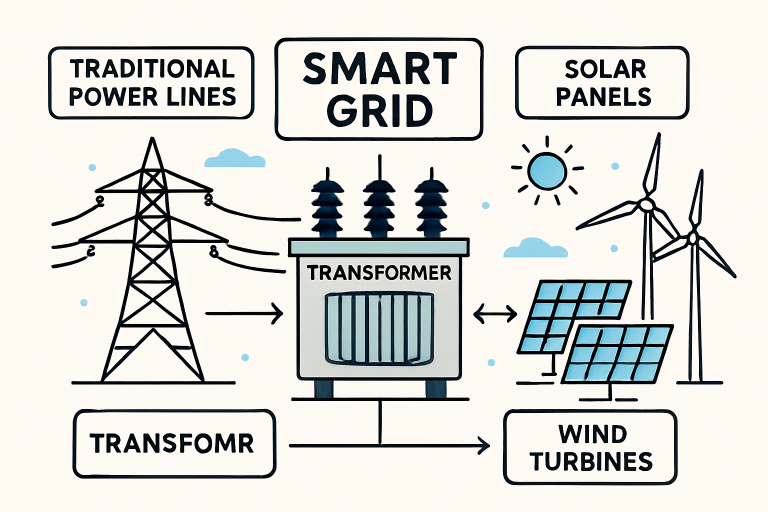
Today’s transformers do more than step up or step down voltage between power stations and end-users. They act as crucial nodes within smarter grids, seamlessly supporting distributed energy resources, renewable integration, and advanced energy storage. Understanding the evolution of transformer technology is essential when considering how power infrastructure can adapt to the ongoing energy transition.
Advancements in Transformer Design
In recent years, innovation has focused on maximizing efficiency while minimizing the environmental impact of transformer operations. The implementation of amorphous metal cores has led to sharp reductions in core losses and improved overall efficiency. This shift away from traditional silicon-steel cores results in significant energy savings throughout each unit’s lifespan. In addition, the arrival of solid-state transformers represents a pivotal leap forward in flexibility. These advanced systems use semiconductors to manage both voltage and frequency dynamically, making them ideal for integrating with renewable energy and for adjusting to grid fluctuations in real time.
These design enhancements are not isolated to core materials or voltage regulation. Enhanced monitoring systems, improved insulation materials, and advanced cooling mechanisms all contribute to higher performance and greater operational life. For organizations searching for integrated solutions, working with an electric equipment manufacturer that continually invests in research and innovation can prove invaluable.
Integration with Smart Grids
The shift towards smarter, more interconnected electrical systems has highlighted the value of intelligent transformer technology. Smart transformers equipped with embedded sensors and communication hardware are now mainstays in modern grids. These systems gather and transmit real-time data on loading conditions, temperatures, and power quality. This information enables utilities to proactively adjust voltage regulation, match demand with generation, and quickly detect anomalies before they affect reliability.
As renewable energy generation expands, the electric grid must accommodate the varying output from wind and solar installations. Smart transformers help smooth out these fluctuations, safeguarding supply quality and reducing the likelihood of outages or power surges. Such advances are critical for ensuring that grid infrastructure remains flexible and robust in the face of growing complexity, as noted in resources from the International Energy Agency (IEA).
Environmental and Efficiency Considerations
Efficiency stands at the forefront of transformer innovation. Even incremental efficiency improvements translate into vast reductions in energy wastage across national power networks, resulting in fewer greenhouse gas emissions and lower electricity costs. Modern transformers can achieve efficiencies as high as 99.7% through advanced insulation, optimized winding configurations, and innovative cooling systems. The transition to oil-free and biodegradable insulating fluids, along with reduced use of hazardous substances, demonstrates a broad industry commitment to sustainability.
Since transformers operate continuously for decades, their environmental impacts accumulate. Industry regulations and voluntary certifications now push manufacturers to prioritize eco-friendly designs, further aligning the power sector with global climate objectives. For more information on trends in sustainability and energy efficiency, see Scientific American’s extensive coverage.
Challenges and Future Directions
Despite significant progress, the transformer industry continues to face several challenges. Global demand has outpaced production capacity, resulting in extended lead times for key models, such as large-power and generator step-up transformers. These supply constraints can delay utility capital projects and create bottlenecks for the rollout of new renewable generators. Manufacturers are responding to this shortfall by investing heavily in new facilities and expanded production lines, but it will take time for the market to rebalance.
Policy and trade issues add further complexity. Increased tariffs on essential raw materials like steel, copper, and aluminum have raised costs for both imported and domestically manufactured transformers. Contractors and utilities must navigate these fluctuations in material costs while still investing in reliable, future-ready infrastructure.
Looking ahead, the focus will remain on digital integration, modularity, and continued reductions in energy losses. Developments in materials science and power electronics could lead to even higher-performing and lower-emission transformers in the coming years. As the energy landscape transforms, the role of flexible, intelligent transformer technology will only grow in importance.
Conclusion
Transformers are the unsung heroes at the heart of modern power systems, quietly enabling the delivery of clean, reliable, and affordable energy. Advances in design, smart grid integration, and efficiency are making today’s transformers more adaptable, resilient, and sustainable than ever before. By embracing innovation and meeting current supply and regulatory challenges, the energy sector can continue to progress toward a future where electricity is accessible, efficient, and environmentally responsible.