How Civil Engineering Consultants Assess Site Feasibility and Risk
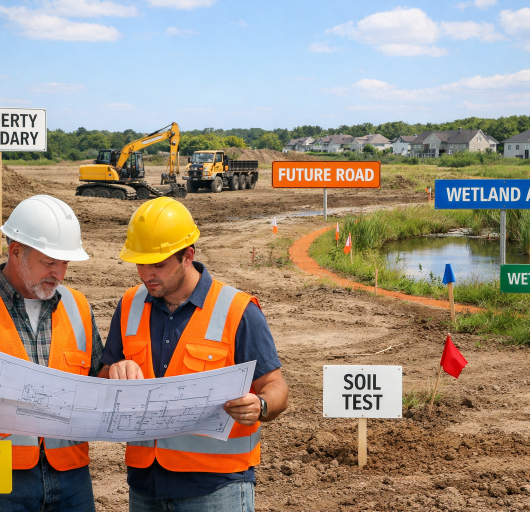
Every successful project begins long before the first foundation is poured or the first beam is placed. Civil engineering consultants in Knoxville dedicate significant effort to evaluating whether a site can safely and efficiently support a proposed development. This assessment involves detailed technical work, coordination with local standards, and the application of civil engineering services designed to reduce future complications.
Table of Contents
- 1 Boundary Surveys Mapped to Establish Legal Property Limits
- 2 Zoning Ordinances Reviewed for Project Compatibility
- 3 Utility Easements Identified Within Proposed Layouts
- 4 Drainage Basin Studies Prepared to Reduce Erosion Risk
- 5 Foundation Stability Tested Under Anticipated Loads
- 6
- 7 Seismic Considerations Evaluated for Structural Resilience
- 8 Access Grading Aligned with Municipal Design Standards
- 9 Construction Staging Assessed for Long Term Site Function
Boundary Surveys Mapped to Establish Legal Property Limits
Boundary surveys mark the physical outline of a site and serve as the first layer of security against disputes. Civil engineering consultants use advanced surveying tools to chart exact property lines, confirming that the land described in deeds aligns with what exists on the ground. Without this verification, Knoxville engineering firms caution that developers risk encroaching on neighboring parcels, which can halt projects midstream.
In addition to confirming ownership, surveys help identify easements, rights-of-way, and encroachments that may affect civil engineering and land development plans. By clarifying these limits at the outset, civil engineering services reduce conflicts and legal setbacks, giving architects and builders a clear canvas to work from.
Zoning Ordinances Reviewed for Project Compatibility
Before a project can move forward, it must align with municipal zoning ordinances. Civil engineering consultants study zoning maps and regulations to confirm that a proposed use—whether residential, commercial, or industrial—fits within existing codes. This review prevents costly redesigns later in the process.
For projects in Knoxville, engineering firms often take additional steps to evaluate future land-use plans issued by local authorities. Understanding these long-range policies helps civil engineering services prepare clients for zoning adjustments that could affect building height, setbacks, or parking requirements.
Utility Easements Identified Within Proposed Layouts
Underground and overhead utilities frequently shape site design. Civil engineering consultants identify the location of sewer, water, gas, and power easements to ensure that new construction does not interfere with existing infrastructure. Overlooking these easements can result in forced design changes or even legal disputes.
By mapping utility corridors early, Knoxville engineering firms integrate service connections into their layouts, saving time during construction. This coordination allows civil engineering and land development professionals to design projects that function seamlessly with current and future utility networks.
Drainage Basin Studies Prepared to Reduce Erosion Risk
Stormwater management is one of the most significant aspects of site feasibility. Civil engineering consultants conduct drainage basin studies to determine how rainfall will move across the property. These studies reveal erosion risks, flooding potential, and the capacity of nearby waterways.
With this knowledge, civil engineering services implement retention ponds, swales, or green infrastructure solutions to control runoff. In Knoxville, engineering firms often design stormwater systems that not only meet municipal standards but also protect long-term site stability.
Foundation Stability Tested Under Anticipated Loads
No structure stands without reliable soil beneath it. Civil engineering consultants test soil composition, compaction, and moisture content to determine its ability to support building loads. These tests guide decisions about foundation type, depth, and reinforcement.
Knoxville engineering firms often work with geotechnical specialists to ensure foundations remain secure under variable conditions, such as seasonal moisture or heavy equipment use. This layer of civil engineering services ensures that structural failures are minimized from the ground up.

Seismic Considerations Evaluated for Structural Resilience
Although Knoxville is not typically associated with frequent earthquakes, seismic risk still plays a role in engineering assessments. Civil engineering consultants study fault lines, soil behavior, and regional seismic data to design structures that can withstand rare but significant tremors.
For projects involving sensitive facilities like hospitals or schools, Knoxville engineering firms emphasize seismic resilience as part of broader civil engineering and land development strategies. These precautions add confidence to investors and reduce potential liability.
Access Grading Aligned with Municipal Design Standards
Safe and efficient access roads form the backbone of site usability. Civil engineering consultants design grading plans that connect developments to public streets while meeting slope, drainage, and visibility requirements. These access designs must satisfy municipal design standards to gain approval.
Civil engineering services in Knoxville often incorporate traffic flow studies into grading plans, ensuring that site entrances and exits do not overwhelm nearby intersections. This attention to access grading protects both site users and surrounding communities.
Construction Staging Assessed for Long Term Site Function
Temporary construction staging areas may seem minor, but civil engineering consultants treat them as critical to long-term site function. Improper staging can compact soils, damage drainage features, or create access issues that linger after construction ends.
Knoxville engineering firms plan staging zones that minimize long-term impact while supporting efficient construction operations. By considering equipment movement, material storage, and worker access, civil engineering and land development professionals maintain site integrity from start to finish.