Top New Vehicle Features for Modern Drivers
Keeping up with the rapid advancements in automotive technology is critical for today’s drivers, as new vehicle features are designed to deliver greater safety, convenience, and an enjoyable driving experience. Automakers are now introducing innovative technologies, from smart dashboards to green materials, that are reshaping the way we drive. To keep pace with these advancements, buyers shopping for their next car should consider what modern features are available. Learn more about the latest vehicles equipped with cutting-edge technology.
Whether you are interested in enhanced safety, sustainable materials, or seamless connectivity, understanding these advances can help you make a more informed purchase. Today’s leading manufacturers are not just making vehicles smarter, but also safer and more eco-friendly. As more drivers demand convenience and security, automakers are responding with tech that makes every journey more enjoyable and efficient. These new vehicle features are helping usher in a new era of driving, where digital intelligence meets real-world utility.
Table of Contents
Augmented Reality Displays
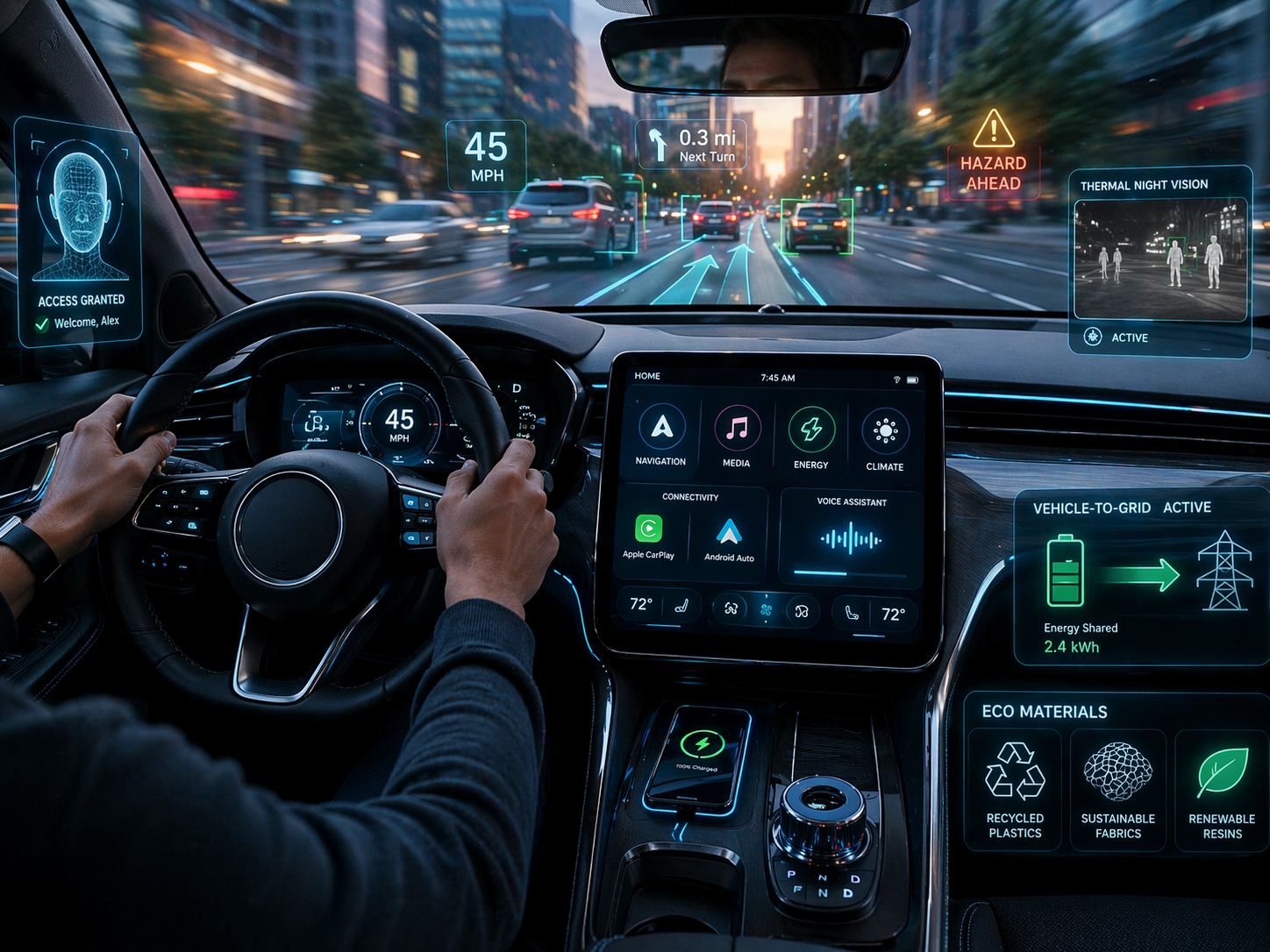
Augmented reality displays are becoming a staple in premium vehicles, transforming traditional dashboards by overlaying vital information directly onto the windshield. This technology ensures drivers have critical data, such as navigation arrows, speed, and road hazards, projected into their line of sight, minimizing distraction and improving on-road safety.
Biometric Authentication
Biometric authentication is changing how drivers interact with their cars. Features like fingerprint readers and facial recognition make vehicle access more secure, reducing the reliance on traditional keys. These systems can also personalize the cabin automatically by adjusting seating, temperature, and infotainment settings to suit each user’s preferences. This technology makes driving safer and more customized for each person.
Advanced Driver Assistance Systems (ADAS)
Vehicle safety has advanced with Advanced Driver Assistance Systems. ADAS integrates smart features like adaptive cruise control, lane-keeping assist, and collision detection, all of which rely on an array of sensors and cameras. These systems help prevent accidents by monitoring the vehicle’s environment and providing warnings or taking action when danger looms. Vehicles such as the BMW iX offer Level 2+ autonomy, showing how even mainstream models are adopting technology that brings semi-autonomous driving closer to everyday reality. ADAS systems provide drivers and passengers with significantly more peace of mind, making roads safer for everyone.
Enhanced Infotainment Systems
Modern cars are equipped with infotainment systems that rival top consumer tech devices in terms of functionality and ease of use. Features including Apple CarPlay, Android Auto, and integrated voice assistants let drivers stay connected without distraction. With larger touchscreens and more intuitive interfaces, systems like those in the Tesla Model 3 provide seamless access to navigation, media, and climate control settings. As infotainment technology continues to evolve, drivers are likely to see an expanding array of apps and features designed for convenience, making it easier to keep eyes on the road while staying informed and entertained.
Vehicle-to-Grid (V2G) Technology
With electric vehicles on the rise, Vehicle-to-Grid technology is reshaping how cars interact with the energy ecosystem. V2G enables EVs to transfer stored energy back to the electric grid during peak times, helping balance demand and promote cleaner, more resilient power sources. As more public and private charging stations deploy this technology, EV owners can enjoy potential cost savings while contributing to broader sustainability efforts, a win-win for drivers and the environment. The expansion of fast-charging networks and the adoption of higher voltage architectures further reinforce the impact of V2G capabilities.
Sustainable Materials in Vehicle Design
Sustainability has moved beyond being just a buzzword in automotive design. Car manufacturers are increasingly incorporating recycled and renewable materials throughout their vehicles, from upholstery to major frame components. These initiatives reflect a broader industry shift toward eco-friendly manufacturing and product lifecycles, as OEMs work to meet regulatory requirements and consumer demand for greener vehicles.
Integrated Dash Cams with Thermal Night Vision
Drivers are also benefiting from advanced safety technologies, such as integrated dashcams with thermal night vision. These systems offer improved visibility in dark or low-visibility conditions, detecting heat signatures from people, animals, or other objects that standard headlights may miss. The Vantrue Pilot 2, for example, combines thermal technology with instant smartphone integration via CarPlay and Android Auto, making top-tier safety accessible to even more drivers. TechRadar highlights how such innovations are helping reduce nighttime accidents and improve outcomes for drivers and pedestrians alike.
Conclusion
The pace of innovation in the automotive industry is accelerating, moving drivers toward a world where safety, connectivity, and sustainability go hand in hand. From AR displays to V2G technology and beyond, today’s new vehicle features are making modern driving safer, more comfortable, and more responsive to the world around us. Staying informed about these technologies will help ensure every drive, whether across town or across the country, is smarter and more delightful than ever before.