The Future of Digital House Hunting: How Technology Is Reshaping the Home Search Experience
In recent years, the landscape of house hunting has undergone a seismic shift, thanks to rapid technological advancements. Gone are the days of flipping through newspaper listings or relying solely on real estate agents for property information. Today, technology offers a plethora of tools that make finding your dream home more efficient and personalized than ever before. For instance, Alys Beach real estate agents The Simpson Group, a team of elite Santa Rosa Beach, FL realtors with Christie’s International Real Estate Emerald Coast, leverage these technological advancements to provide exceptional, personalized service to clients seeking coastal real estate.
Table of Contents
- 1 Virtual and Augmented Reality: Transforming Property Tours
- 2 AI and Big Data: Personalizing the Home Search
- 3 Mobile Applications and Online Platforms: Streamlining Searches
- 4 Smart Home Technologies: Enhancing Property Appeal
- 5 Blockchain: Securing Real Estate Transactions
- 6 The Role of Experienced Real Estate Agents
- 7 Conclusion
Virtual and Augmented Reality: Transforming Property Tours
VR and AR have transformed property viewing. Buyers can now take virtual tours of homes remotely, saving time and travel costs. Many agencies offer 3D walkthroughs and panoramas. Advanced AR apps let buyers visualize renovations or furniture overlaid on existing layouts, helping them imagine living in the space and aiding decision-making. This creates a more interactive experience that appeals to tech-savvy shoppers.
AI and Big Data: Personalizing the Home Search
Artificial intelligence (AI) leverages big data to deliver personalized property recommendations. By analyzing browsing behavior, saved searches, and preferred architectural styles, AI-driven real estate portals refine the property suggestions users see. This personalization ensures that buyers are presented with options that closely match their preferences, streamlining the search process.
Furthermore, AI chatbots and virtual assistants have become integral in assisting homebuyers by answering questions in real time, scheduling showings, and providing up-to-the-minute market data. Predictive analytics tools can forecast price trends in specific neighborhoods, enabling buyers to invest in properties more likely to appreciate over time. This data-driven approach reduces uncertainty and brings transparency to what is often the largest financial decision in most people’s lives.
Mobile Applications and Online Platforms: Streamlining Searches
The advent of mobile applications and online platforms has made property searches more accessible. Websites like Zillow and Realtor.com allow users to filter listings based on specific criteria, including price, location, and amenities. This immediate access to information empowers buyers to make informed decisions quickly.
Additionally, collaborative search tools let family members, friends, or co-buyers share notes, favorite listings, and discuss properties in-app, further enhancing the digital house hunting experience. Push notifications alert users to new listings that match their criteria as soon as they go live, reducing the risk of missing out on desirable properties in competitive markets. The integration of mortgage calculators, neighborhood statistics, and direct messaging with agents further streamlines the buyer journey.
Smart Home Technologies: Enhancing Property Appeal
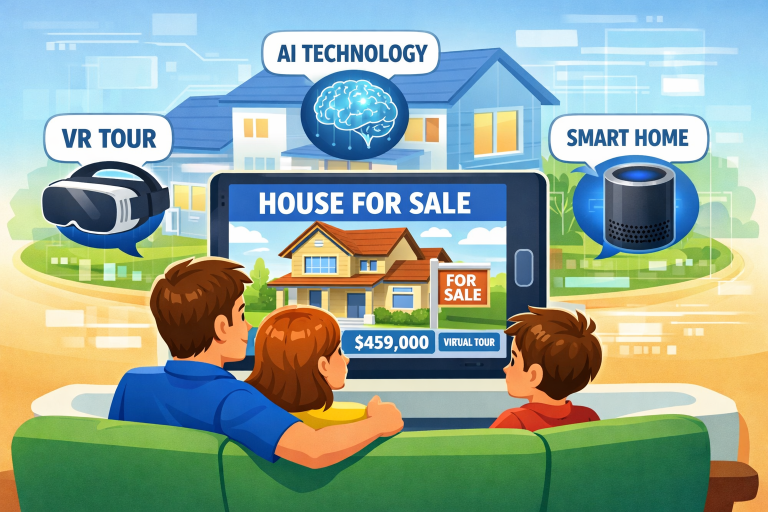
Smart home technologies have become a significant factor in property appeal. Features like automated lighting, climate control, and security systems not only provide convenience but also increase a property’s value. Buyers are increasingly seeking homes equipped with these technologies, viewing them as essential rather than luxury additions.
The rise of sustainable smart home features, such as solar panels, energy-efficient appliances, and advanced water-saving systems, is also influencing buyer decisions. Younger buyers, in particular, are prioritizing eco-friendly homes that promise lower utility bills and reduced environmental impact. Furthermore, homes with integrated virtual assistants, such as Amazon Alexa or Google Assistant, offer the ultimate convenience, giving prospective buyers another reason to consider smart-enabled properties.
Blockchain: Securing Real Estate Transactions
Blockchain technology provides a secure, transparent way to conduct real estate transactions. By utilizing smart contracts, blockchain can streamline the buying and selling process, reducing the need for intermediaries and minimizing the risk of fraud. This innovation is set to make property transactions more efficient and trustworthy.
In addition to increasing trust between buyers and sellers, blockchain platforms simplify title transfers and facilitate seamless, cross-border real estate transactions. By recording ownership and transaction histories on an immutable ledger, blockchain reduces paperwork and expedites previously labor-intensive tasks, especially in markets where speed and transparency are crucial.
The Role of Experienced Real Estate Agents
While technology has transformed many aspects of house hunting, the expertise of seasoned real estate agents remains invaluable. Professionals like The Simpson Group offer personalized guidance that technology alone cannot provide. The Simpson Group specializes in luxury properties along Florida’s scenic 30A corridor, bringing a wealth of local market knowledge and a commitment to client satisfaction. Their deep understanding of the area and dedication to service make them a trusted resource for buyers navigating the complexities of the real estate market.
Agents complement digital advancements by providing access to off-market listings, negotiating favorable terms, and offering in-depth insights into neighborhood dynamics that data alone cannot reveal. Additionally, skilled agents help buyers interpret inspection reports, assess renovation needs, and coordinate with lenders, appraisers, and attorneys throughout the closing process, ensuring a smooth and successful transaction.
Conclusion
The integration of technology in home search has improved efficiency and access. Yet, combining digital tools with experienced real estate professionals offers a more comprehensive approach to finding the right home. As technology advances, the blend of digital innovation and human expertise will shape the future of house hunting. Looking ahead, expect more seamless integration like AI-driven mortgage qualification, negotiation platforms, and virtual staging that adapts in real time. For buyers, staying informed about these innovations and working with trusted experts keeps the search exciting and rewarding as technology evolves.